

Last updated on June 27, 2026
Murano and Burano are two islands in Venice, Italy, that are rarely mentioned when speaking of Venice. They are easy to get to and well worth the trip.
What is Murano island and Burano island?
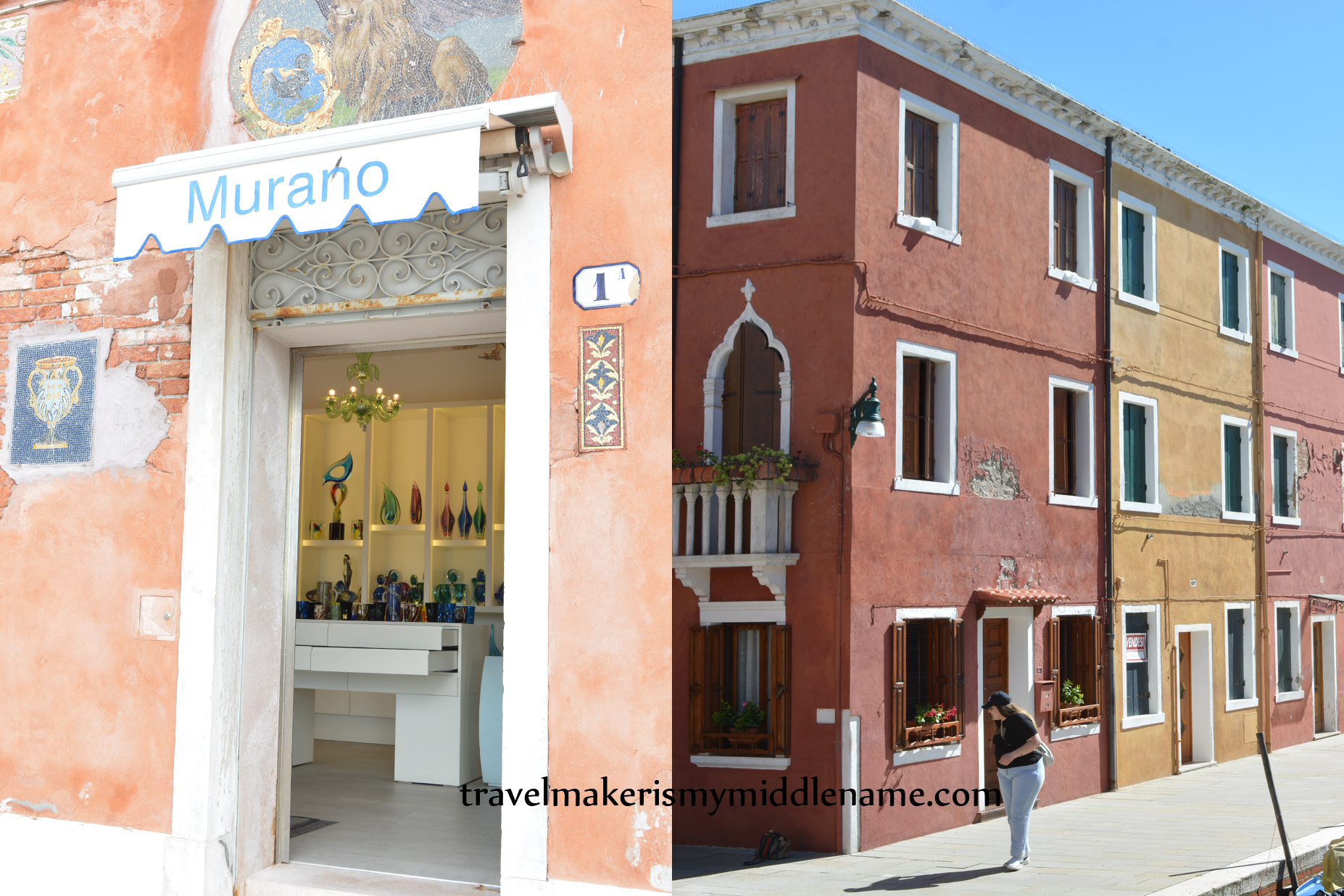
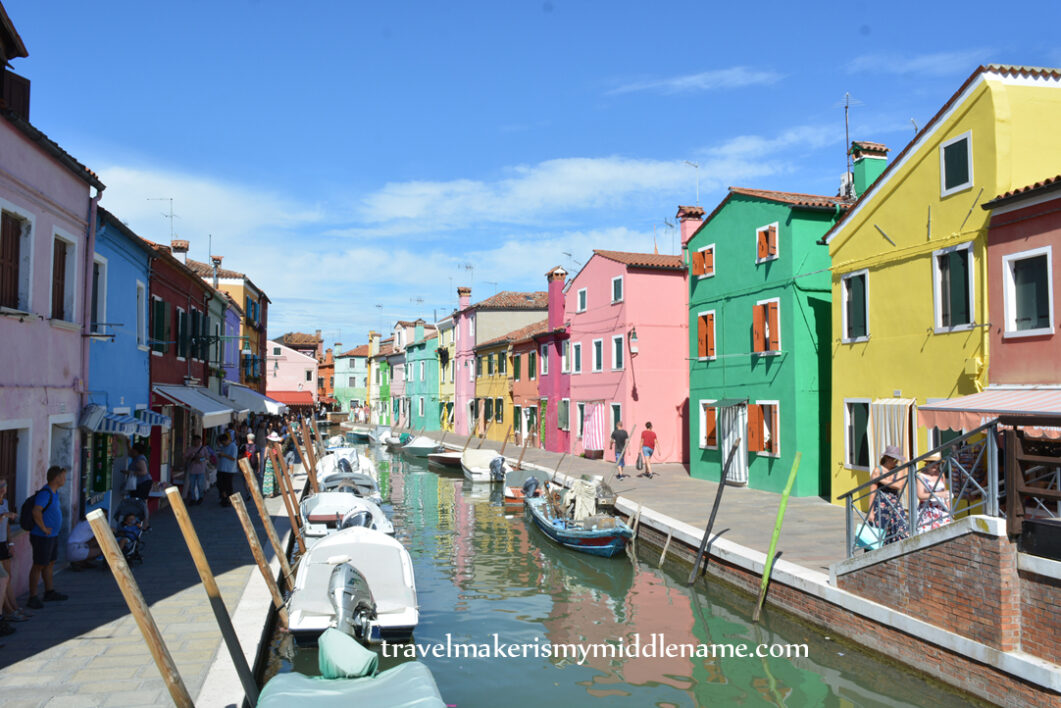
Both Murano and Burano are (a cluster of) islands in the Venice city area, located away from the historical town center of Venice (confused what “Venice city” and “historical town center of Venice” are? Read the first time visitor’s guide here) in the northern lagoon. The two islands are known for their handmade crafts, glassworks and lacework respectively, but started out as fishing and salt making villages and refuges for citizens of Altino (a town along the middle of the eastern coast of Italy) who were escaping the barbarian invasions at the fall of the Roman empire in the first century. Many shops sell locally handmade glassworks and laceworks. They are also very popular and famous for their photogenic vibrantly coloured houses.
How Murano became known for glasswork

1,500 years ago, Venice became the hub for glassware. This laborious process used high temperature fires and produced highly popular and delicate glassworks that were used in buildings such as public bath houses and churches, and exported and traded for other goods. However, due the to the nature of the work, glass making facilities frequently caught fire. On November 8th, 1291, the Venetian government declared that all glass manufacturing must move to the island of Murano, to avoid a fire burning down the entire city of Venice, which was constructed mostly of wood.
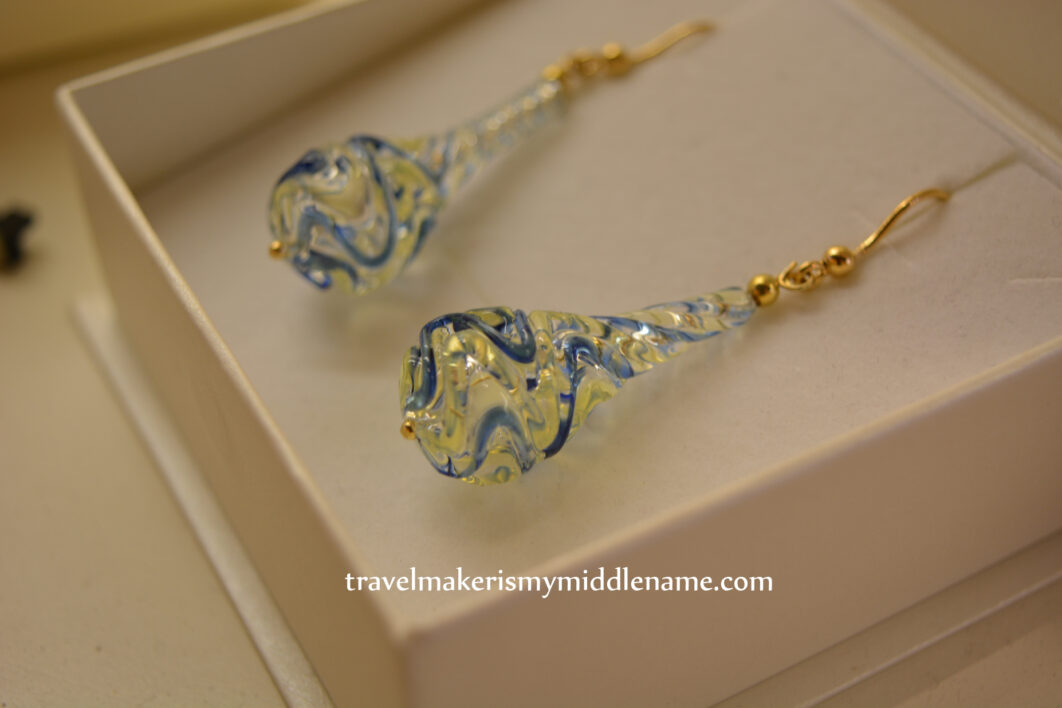
The techniques involved in making glass were handed from father to sons, and revealing the secrets of glass making was strictly forbidden, so the island obtained a trading advantage since all the skills and techniques were concentrated and retained in the one area.
How Burano island became known for lacework

Like Murano, Burano started as a fishing village. The ladies of the island constantly had to repair fishing nets used by their husbands. What started as basic weaving of thicker ropes eventually turned to intricate patterns and thin strings, creating lace.
A lacework school was created in the 15th century, where girls 12 and up attended. A hundred years later, Venice became the center of Europe for laces.
In the 1600 and 1700’s, Venetian lace was at the peak of its popularity. Fancy Venetian lace was a status symbol for the European nobles and monarchy. Lace was used in both men and women’s fashion elements, from clothing to handkerchiefs. Cloth merchants moved their production to Burano to keep costs low. Women worked on the assembly lines to produce the lace products.
Lacework was a skill passed from mothers to daughters. Even after lace fell out of fashion, Burano is still known for lacework.
What do to on Murano and Burano island
One of the major attractions of Murano and Burano are the colourful houses on the island. The houses there are vibrantly painted and popular photography sites. There are small canals as well as open ocean waters where the ferry (vaporetto) travel through.

The towns also have their own town center with a clock tower. There are also restaurants and gelato stores, although these are clustered in streets near the entry points to the town where the ferry docks, to the town center, and along the main canal.
You can walk a bit further into the town and neighbourhood streets to see the less touristy parts of the town, but remember that people live there, so be respectful and don’t venture uninvited into people’s homes.
Things to note:
Some items sold in Murano and Burano might actually be imported rather than locally made. Be sure to check the item before you purchase if you intend on buying something “locally made”. Some items may also be sold on the main island of Venice, perhaps even for a different price, so if you have the time, it may be worthwhile checking shops on the main land before you shop in Murano to get an idea of the prices and products available.
In Murano, many shops close to the island’s entry point near the main ferry dock, have glass making demonstrations. They will have a sign out the front, even at the ferry docks, directing you to their place. Most, if not at least many, charge for the demonstration. There are also many other glass stores in Murano if you head further into the town.
You can see a free demonstration of glass making at New Arte Fuga, a shop in Burano.
For details and a coupon for a discount, see www.isoladiburano.it/en/shops/newartefuga/NewArteFuga.html
How to get to Murano and Burano
Venice to Murano
From Venice historical town island, take a ferry 12 (Linea 12) from ferry stop Fondamente Nove on the north eastern side of the island to Murano. The trip takes 19 minutes and is the first stop on this line.
Venice to Burano
Burano is the third stop on this line and takes between 42-46 minutes depending on the time of day, when the same ferry stops at different wharves on Burano. There are three different wharves on Burano, Burano A, B and C, located within metres of each other. You can get off at the first Burano stop if you intend to go to Burano island.
Official timetable for ferry line 12: https://actv.avmspa.it/sites/default/files/avm/navigazione/Actv_nav_linea_12.pdf
See the next departure times for the various ferry lines:
https://avm.avmspa.it/it/content/orari-servizio-di-navigazione-0
If you found this article helpful, please make a donation.
I know these messages are annoying, but please don’t skip this. If you’ve read this far, please make a donation. I am not just another blogger soliciting donations.
What I am asking donations for:
I need financial stability because my disabilities and chronic illnesses prevents me from getting a job to recover from a devastating financial loss. I am asking for donations to recover the money I lost.
Why I am asking:
I:
• have serious lifelong disabilities and chronic disease from multiple cancers, including a childhood one that destroyed my ability to grow and develop normally,
• live in a difficult situation,
• lost my life savings.
I am raising funds to rebuild the financial security I lost after becoming the victim of a scam. Due to severe disabilities and chronic illnesses caused by childhood cancer treatment and subsequent health problems, I am unable to work and cannot recover these losses through employment. Donations will help me cover essential living costs, medical expenses, legal costs, and to restore some semblance of living to my life and hopefully, pursue some dreams of mine.
Why now:
People rush to donate when a visible tragedy happens. The rest is ignored. Although my first cancer happened over 30 years ago when I was a small child, the consequences of the treatment is just as devastating, and even more so, since I was robbed of ever having a normal life from the beginning. My consequences are permanent and life-long. While it might not seem like a sudden event with great impact, the reality is, it is indeed an event with severe impacts. I live with the consequences of something I had no say in, every day, and it affects me minute to minute, in an increasingly severe manner, and I will always suffer the consequences, permanently. After years of trying to build financial independence despite my disabilities, I lost my savings through a scam out of desperation to try and leave an unsafe living situation. Because I cannot rely on paid employment, rebuilding those savings is not something I can possibly do alone.
How your donation can help:
The passage of time doesn’t make it better, in fact, it makes it worse. The long term effects of my cancer treatment gave me multiple permanent and degenerative disabilities and chronic medical conditions that requires ongoing health care and support. I have been long term unemployed as a result, and live in an unsupportive household with no other options. To make matters worse, out of desperation to get out of the hole I am in, I fell victim to a scam, losing my entire life savings and leaving me in complete ruin and further unable to change my situation. I am stuck in a vicious cycle because I cannot seek a better environment to move to without money, and I can’t earn money with all my health problems, and I can’t seek treatment interstate or overseas without money.
An authentic request:
I am remaining anonymous for safety reasons, but I have provided verification documents with identifying information redacted, in my fundraiser.
About this site:
Despite my disabilities and chronic health diseases, I love to travel. Most of the travel I have done and places I have visited, I went as a solo traveller. I started this as a blog in 2015, where I posted reviews and practical information about places I have been to. Now, this is a standalone site that contains practical and useful information that I gathered from first hand, personal experience and independent travel, and I pass on this information so you know what you’re doing and what to expect, instead of blindly following a tour group or an influencer’s cherry-picked and staged photos. All the food and destination photos on this website are taken by me. I maintain this site and and my other sites alone, and take great care to ensure content is correct at the time of writing, and practically useful for potential travellers.
If you connect with my story, find my content helpful, and want to support me personally:
Please donate to my personal fundraiser, or share my fundraiser if you cannot. I wouldn’t be asking if I had other options, and if everyone pitched in, my goal can be achieved. You can read about me on my About page. Thank you.
Alternatively, if you would like to support a female, solo and independent traveller, you can have a look at my photos here, prints are available for purchase: https://theintrepidphotographer.com/
©All rights reserved for all content and photographs, usage on 3rd party platforms, including, but not limited to, websites and smartphone apps, and to train AI in any way shape or form, is forbidden without prior written permission. Photos are taken by author unless otherwise stated and is available for licensing.
Related posts:
 Venice, Italy – An informative guide for first time visitors
 12 Free and paid things to do in Venice, Italy
 Your practical guide to German Christmas markets: What to see, do, buy, and eat
 Why you need to visit Venice NOW Summer 2023
 Venice charges permanent access fees to day visitors
 Cinque Terre, Italy: A practical guide for first-time visitors – where to stay, how to get there and what to expect


