

Last updated on June 26, 2026
A new labelling rule has been implemented for all restaurants in Australia selling seafood. Not all restaurants will explain what the new labelling letters mean, so if you’re a tourist enjoying seafood in Australia, here is what you need to know.
From July 1, 2026, all restaurants, eateries, including food trucks and places selling pre-prepared food, must show the origin of all seafood on their menu and labels.
This is a big task and is being implemented all across Australia. While there are many other, more serious issues to tackle, the apparent reason for this trivial rule is to allow consumers to make informed decisions about what to buy. Raw fish sellers (eg fish mongers and seafood stores) are already required to show the country of origin of seafood, but up to now, restaurants are not. There is no particular reason why this rule only applies to seafood and not terrestrial meat and vegetables and fruit.
How does the new Australian seafood labelling system work?
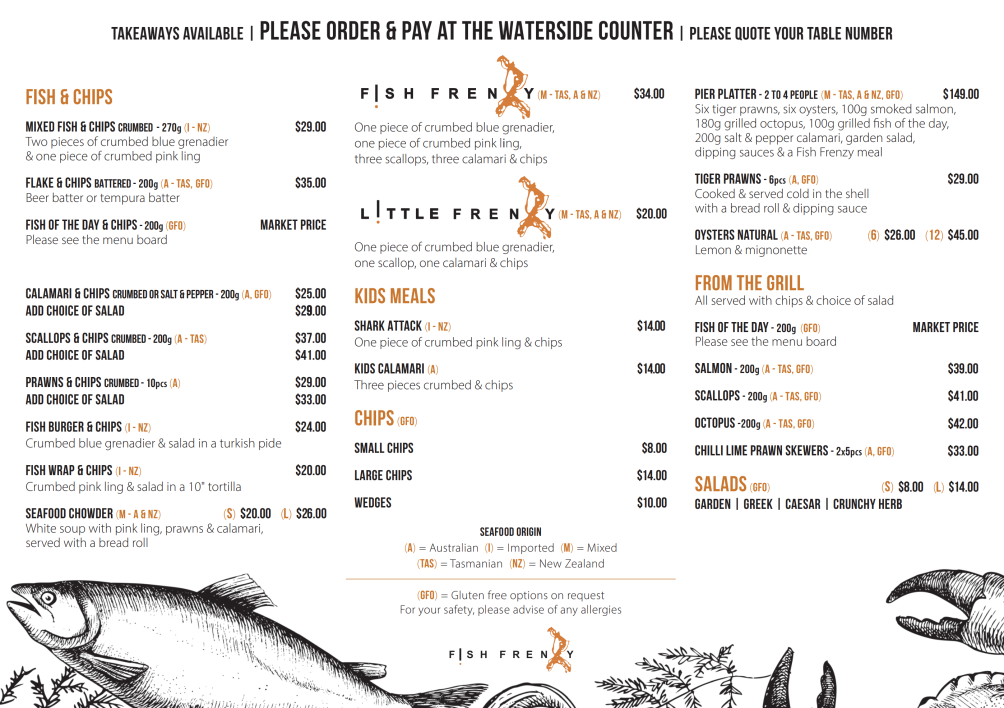
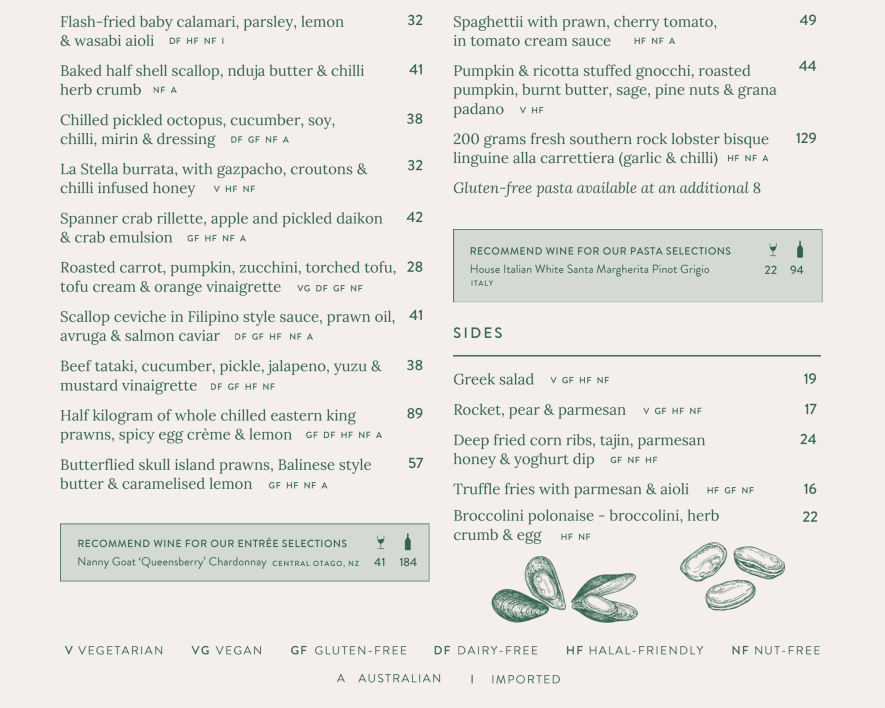
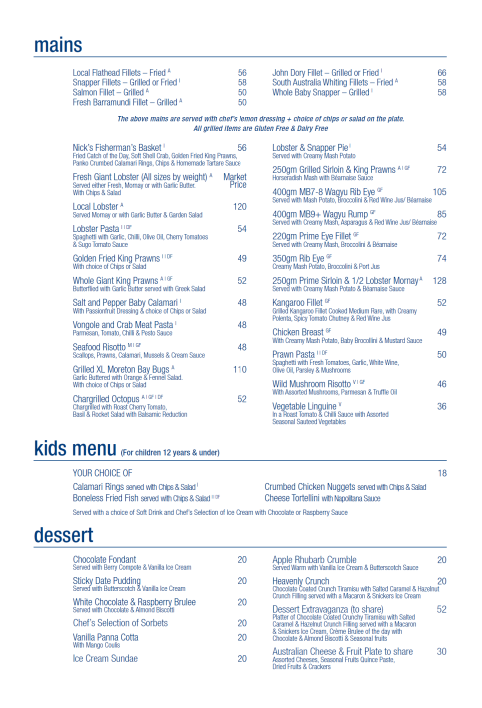
The new Australian seafood labelling system is called the AIM system and works like this: each letter represents the origin of the product, and is to be displayed next to the item:
A – Australian
I – Imported
M – Mixed (some from Australia, some from other countries).
It is not compulsory to say what the country of origin is if the ingredient is imported or is a mix.
Are there any exemptions to the new Australian seafood labelling rule?
Catering services and sauces, pastes etc and non-seafood products do not have to use the AIM labelling system.
Real world implications of the seafood AIM labelling system – is it actually useful?
There is not a lot of real world implications for the new AIM seafood labeling system for the average buyer. Australian fishmongers and suppliers welcome the change since they argue without it, they compete with imported seafood, and consumers would not know where their seafood is coming from. For those who support Australian made/grown, this new labelling system can provide them with information to make decisions. For the average buyer especially those who choose based on price in a cost of living hardship period, it makes little difference. It is also hard to keep up since alternatives might be substituted if Australian source of an ingredient becomes suddenly unavailable due to unexpected demand, and imported sources have to be used. It is not practical to re-print multiple copies of the entire menu for a temporary shortage.
Why consumers should still be careful
This new labelling method might tell you where the ingredient came from, but it does not actually tell you anything about the quality or value for money of the product, and can instead be used as an excuse or mask to hide inflated prices.
It is not compulsory to actually name the exact variety of fish on the menu.
Often, a fancy name like “Blue Grenadier” is used instead of “Hoki”, which is an affordable white fish, even though they are the same. Then, if labelled as “Australian” (if it was caught or farmed in Australia), it can be used to justify higher price. Sometimes a name is not used at all.
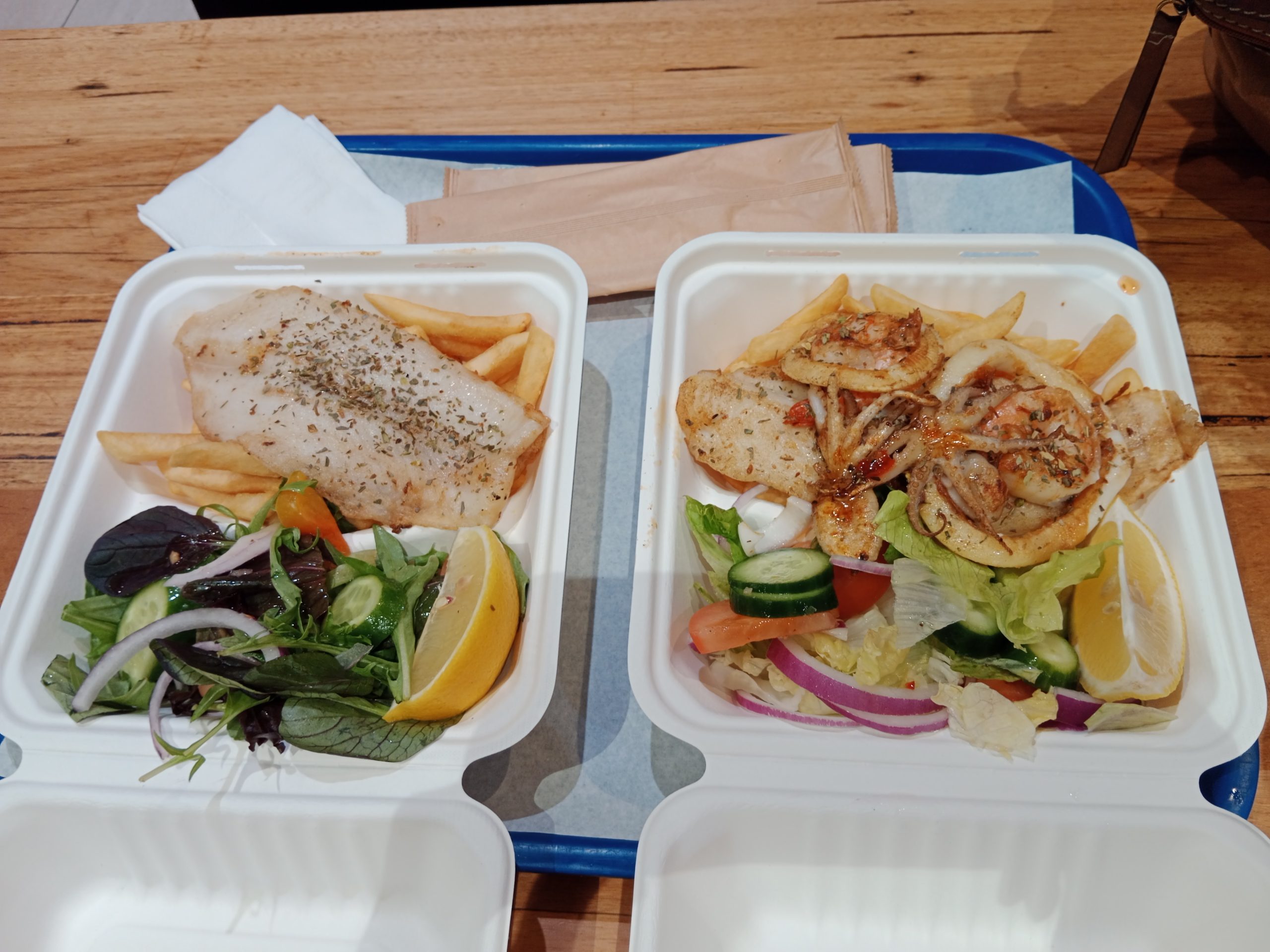
For example, the fish used in fish and chips meals or cheap food court Asian fish dishes or fish cocktails are almost exclusively cheap basa fish. Taking the first menu above as an example, the larger Mixed Fish and Chips consists of two pieces of Blue Grenadier at 270g for $29 Australian Dollars (AUD), considerably cheaper than the smaller portion of Battered fish of 200g, and chips for $35 AUD, because the Blue Grenadier is imported from New Zealand while the unspecified but likely basa or similar white fish battered fish is from Australia. The irony is that if you were buying this in New Zealand, being from New Zealand, the Blue Grenadier would have bragging rights and probably be more expensive than the Australian battered fish, which would relatively become the imported one.
It also doesn’t tell you anything about whether it is fresh or frozen and Australian oysters are just as susceptible to food poisoning if not stored and handled correctly.
But for tourists, you can now actively choose to try specifically Australian seafood if that is what you want.
If you found this article helpful, please make a donation.
I know these messages are annoying, but please don’t skip this. If you’ve read this far, please make a donation. I am not just another blogger soliciting donations.
What I am asking donations for:
I need financial stability because my disabilities and chronic illnesses prevents me from getting a job to recover from a devastating financial loss. I am asking for donations to recover the money I lost.
Why I am asking:
I:
• have serious lifelong disabilities and chronic disease from multiple cancers, including a childhood one that destroyed my ability to grow and develop normally,
• live in a difficult situation,
• lost my life savings.
I am raising funds to rebuild the financial security I lost after becoming the victim of a scam. Due to severe disabilities and chronic illnesses caused by childhood cancer treatment and subsequent health problems, I am unable to work and cannot recover these losses through employment. Donations will help me cover essential living costs, medical expenses, legal costs, and to restore some semblance of living to my life and hopefully, pursue some dreams of mine.
Why now:
People rush to donate when a visible tragedy happens. The rest is ignored. Although my first cancer happened over 30 years ago when I was a small child, the consequences of the treatment is just as devastating, and even more so, since I was robbed of ever having a normal life from the beginning. My consequences are permanent and life-long. While it might not seem like a sudden event with great impact, the reality is, it is indeed an event with severe impacts. I live with the consequences of something I had no say in, every day, and it affects me minute to minute, in an increasingly severe manner, and I will always suffer the consequences, permanently. After years of trying to build financial independence despite my disabilities, I lost my savings through a scam out of desperation to try and leave an unsafe living situation. Because I cannot rely on paid employment, rebuilding those savings is not something I can possibly do alone.
How your donation can help:
The passage of time doesn’t make it better, in fact, it makes it worse. The long term effects of my cancer treatment gave me multiple permanent and degenerative disabilities and chronic medical conditions that requires ongoing health care and support. I have been long term unemployed as a result, and live in an unsupportive household with no other options. To make matters worse, out of desperation to get out of the hole I am in, I fell victim to a scam, losing my entire life savings and leaving me in complete ruin and further unable to change my situation. I am stuck in a vicious cycle because I cannot seek a better environment to move to without money, and I can’t earn money with all my health problems, and I can’t seek treatment interstate or overseas without money.
An authentic request:
I am remaining anonymous for safety reasons, but I have provided verification documents with identifying information redacted, in my fundraiser.
About this site:
Despite my disabilities and chronic health diseases, I love to travel. Most of the travel I have done and places I have visited, I went as a solo traveller. I started this as a blog in 2015, where I posted reviews and practical information about places I have been to. Now, this is a standalone site that contains practical and useful information that I gathered from first hand, personal experience and independent travel, and I pass on this information so you know what you’re doing and what to expect, instead of blindly following a tour group or an influencer’s cherry-picked and staged photos. All the food and destination photos on this website are taken by me. I maintain this site and and my other sites alone, and take great care to ensure content is correct at the time of writing, and practically useful for potential travellers.
If you connect with my story, find my content helpful, and want to support me personally:
Please donate to my personal fundraiser, or share my fundraiser if you cannot. I wouldn’t be asking if I had other options, and if everyone pitched in, my goal can be achieved. You can read about me on my About page. Thank you.
Alternatively, if you would like to support a female, solo and independent traveller, you can have a look at my photos here, prints are available for purchase: https://theintrepidphotographer.com/
©All rights reserved for all content and photographs, usage on 3rd party platforms, including, but not limited to, websites and smartphone apps, and to train AI in any way shape or form, is forbidden without prior written permission. Photos are taken by author unless otherwise stated and is available for licensing.
Related posts:
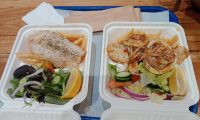 澳大利亚餐厅的海鲜新标签规定将于 2026 年 7 月 1 日开始实施。 不懂?读这个。
 Ticket prices, exhibits, facilities and transport: Your one stop shop guide on Taronga Zoo, Sydney, Australia
 A trip to the Cinque Terre, Italy: Beautiful views and the disappointing seafood
 How to go to China for a short holiday WITHOUT getting a visa in advance! (Updated August
 Other issues with the Kiel Medical Life Sciences program
 Full breakdown of the Masters of Medical Life Sciences at the Christian Albrechts University of Kiel, Germany: Rules, Campus facilities, Semesterticket, Student card and more

