Last updated on July 24, 2026
Planning your end-of year break and looking for something different with a bit of variety?
Try exploring north‑eastern China on a 6‑day English‑speaking winter tour through Heilongjiang province.
About this itinerary
Snow Town is a highly popular winter holiday destination for domestic Chinese tourists, and is little known to foreign tourists. I found out about Snow Town from Chinese travel articles, and sssssssfirst visited Snow Town as a solo traveller in December 2019. I joined a domestic Chinese tour group that caters for domestic Chinese tourists, and used that experience and further research to create this 6‑day itinerary and tour to include all the sights you should see while providing service that foreigners would expect, with English speaking guides or translators.
Snow Town is very difficult to get to on your own due to the location, and the several, complex logistics involved.
1. Transport
There is no railway system, and, despite having a public car park, the winding road in the mountains make it difficult for novice drivers to get to. A public bus route from Harbin to Snow Town for independent travellers started in the 2024/2025 winter season, but is subject to the same road openings as everyone else.
2. Scenic park entry ticket
Even with transport sorted, there are still many logistical challenges involved. To enter Snow Town, visitors must buy a ticket through the scenic park office, and this can only be done via the Wechat app and navigating it in Chinese. Travelling independently to Snow Town requires you to buy your own bus ticket from the ticket office in Harbin, and your own scenic park entry ticket. The scenic office is quite difficult to get through to by phone, and when I finally got through to them, they said there are no direct booking platforms outside China.
3. Accommodation
After that, you will still in need to arrange accommodation. Snow Town is a vehicle-free scenic village, and contains its own hotels. Tour coaches arrive at the public bus, and a smaller bus will shuttle visitors to the entry of Snow Town. You will need to either book your own accommodation within Snow Town village on Chinese booking platforms, or know exactly where your accommodation outside the village is, how to get there, and how to get to Snow Town from there. Many places claim to be in Snow Town, when in fact they are in the wider region of Shuang Feng Lin Chang. An analogy is Venice: Venice is actually a big city, but the Venice most people think of when it comes to travel, is the old town in the lagoon, and you will need to travel between the rest of the city and the old town.
4. Possible visiting dates can vary
Opening dates of the scenic park is highly weather dependent (as is the Snow and Ice Sculptures in Harbin), so the exact opening and closing dates each year changes. The only way to find out is via Wechat. Early closure notices are published by the scenic park on their Wechat account.
5. Quality of domestic Chinese tour may be different to foreign standards
Most domestic Chinese tour groups experiences have standards that may be considered lower by foreign standards. For example, domestic Chinese tour groups focus on speed and volume, because of the vast number of tourists there are in the domestic Chinese market alone. One consequence of this is the groups are fed by large dining halls and/or with food that are simple and fast to make in large volumes, so that the tourists can be fed quickly, instead of focusing on showcasing local specialties, skill, and offering more choices. Tours can also be rushed.
6. Not all domestic Chinese hotels and tour agents can handle or receive foreign tourists
For legal reasons, not all hotels in China are licensed to accept foreign, passport-holding tourists. If you were to book your own accommodation, especially on Chinese sites like Trip.com (even on the English language site), it is possible that you might accidentally book a hotel that won’t accept you, and you will turn up with your luggage and have no place to stay. Also, not all agents have handled foreign overseas tourists yet, and the logistics of doing this is different too. For example, if you get injured, where do you go? A tour agency who handles foreigners would know where to send a foreign tourist who needs medical help.
7. Payment
China has become mostly and widely cash-free in the past few years. Even in 2019/2020, many places were already cash-free. China does not have nor accept Mastercard or Visa, instead, they use Wechat, QQ Wallet, or Alipay. You will very likely need to pay for things with one of these, including the domestic tour agency you book with, or other Chinese online platform you book anything with if you were to go alone or book with a domestic tour group.
About this tour
I experienced Snow Town personally, and then did all the leg work for you and worked with a local tour company to custom make this itinerary. This itinerary perfectly blends sight seeing, authentic food, history, and local experiences, all with an English speaking guide or translator, while making sure it meets western standards and expectations as far as possible while maintaining authenticity. I planned the itinerary based on personal experience, including the must-sees in Harbin, while the tour itself is operated by an experienced local Chinese travel company that accepts foreigners. They specialise in private tours for international visitors and have handled all sorts of cases with foreign tourists, and focuses on authentic local experiences rather than tourist traps, and have made excellent recommendations that I have added to this itinerary. They know all the best local places to eat and the best value activities to give you an authentic experience, and avoid touristy gimmicks. I’ve also arranged with the tour agency to have participants who cannot pay with Chinese payment methods, to pay me partially in Australian dollars, and the rest to to the tour agent upon arrival.
You’ll visit several regions in North East China: Harbin, Snow Town, and Mudanjiang—regions all known for their crisp and unique winter climate, distinctive food culture, and hospitable locals.
What’s so different about North East China?
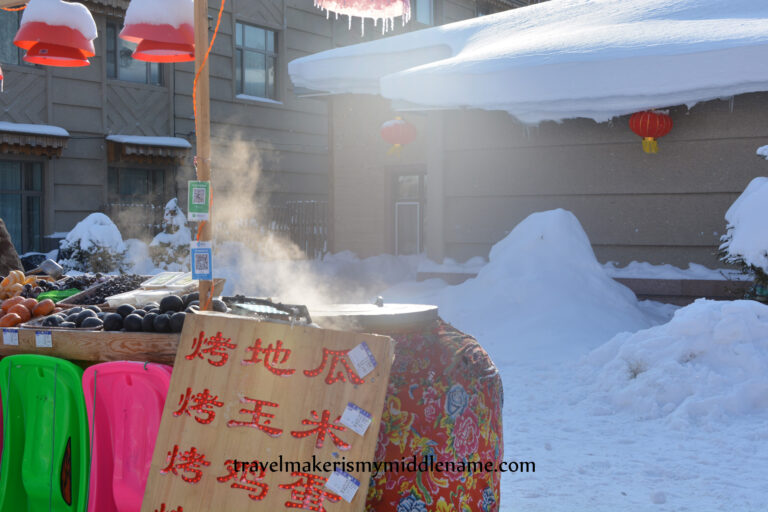
Dong Bei, or “North East” in Mandarin Chinese, is an area in China known for its winter climate. In China, it is the home of winter and snow. Heilongjiang province, which is in the north east of China and China’s major agricultural province, actually borders Russia in the north. So expect really cold temperatures: -30°C is a common winter temperature for Harbin and Snow Town, where you can see scenic snow-covered landscapes, and eat hearty regional dishes such as Guo Bao Rou (sticky caramelised pork slices), coal or fire roasted sweet potato, steamed sticky rice buns, and locally brewed beer, all reflective of Heilongjiang’s agricultural industry. Boiled dumplings also originated from north east China, so you’ll be visiting the home of dumplings!
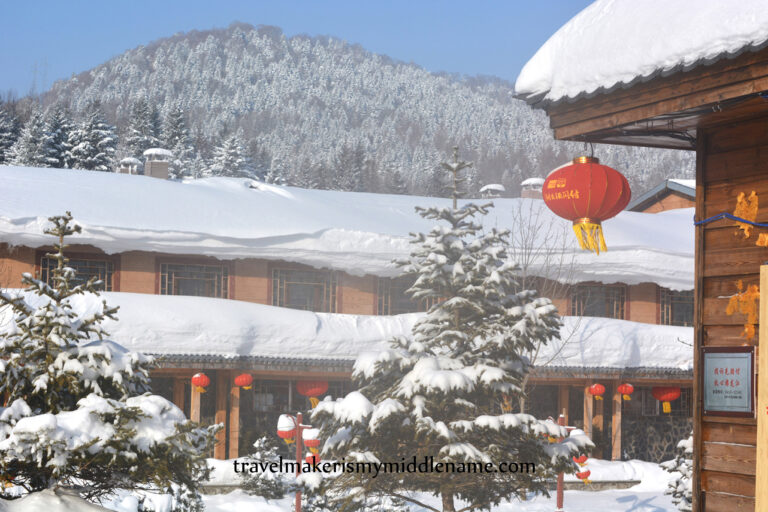
What will you do
The package includes a stay in Snow Town, a well‑known domestic holiday spot that many foreign travellers never get the chance to see. Snow Town is a car-free mountain village that is covered in soft, white snow in winter, it is a highly popular seasonal destination in China and regularly books out each winter season. The partnering agency knows the best local restaurants, scenic spots, and activities to help you get the most out of the region.
You’ll also try authentic local food, visit a a frozen lake and have your photos taken by a drone, see the snow and ice sculptures in Harbin, sleep in a traditional Kang bed (subject to availability), try the local ice cream, and visit the Unit 731 Japanese bio warfare and experiment museum to name a few.
This itinerary blends food, culture, history, and relaxed sightseeing out in nature. It’s suitable for solo travellers, couples, or friends travelling together. Now that China has a 30 day visa-free entry for visitors from many countries, you have one less thing to worry about!
Why visit China in winter
China is a vast country in terms of everything – food, people, culture, and of course, geography. Most people tend to go in the spring or summer, which is perfect for many other places in China.
But winter is a great time to see many other things in China, in fact, it is the only time to see the annual Snow and Ice sculptures in Harbin. However, this is not the only thing visitors can see in winter.
North‑eastern China remains an under‑visited region for international travellers, offering experiences and landscapes that is not available in other parts of the country. Infrastructure in North East China is well suited to the climate and the buildings are well heated, and the local clothing are affordable and protects you from the local cold winters.
If you want to visit a place that is not westernised but still has perfect facilities to welcome visitors, you should try my north east China tour.
If you’d like to learn more about Snow Town, you can read a short overview or watch the video below.
Read about Snow Town here or watch the short destination information video I made below:
Tour Overview
Jump to the itinerary here.
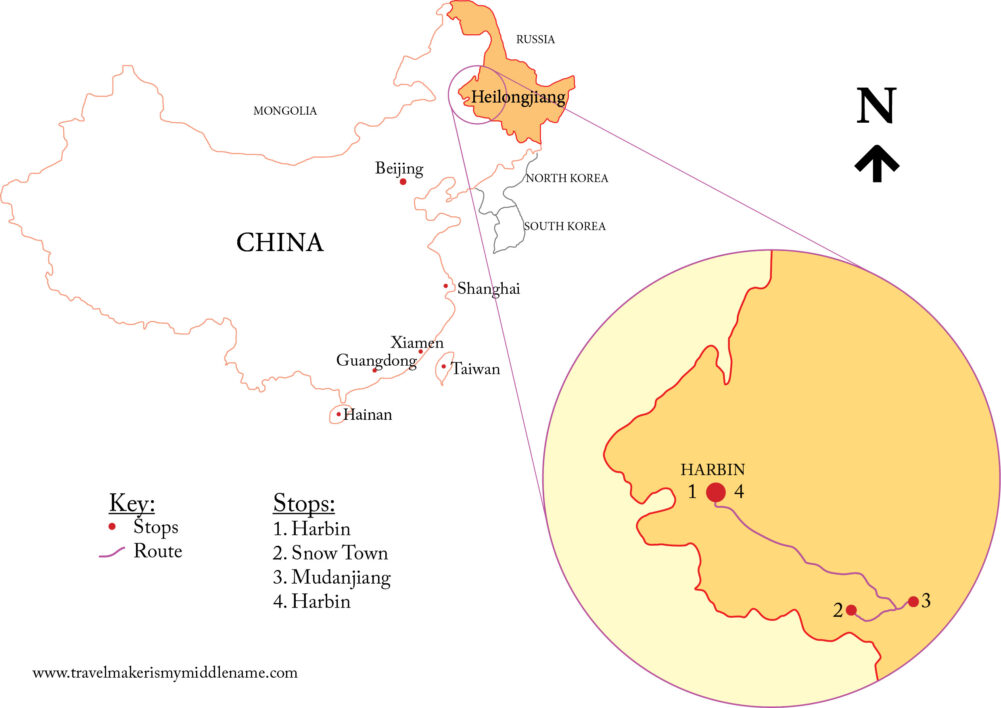
The tour starts and ends in Harbin city.
Participants meet in Harbin city, which is conveniently serviced by Taiping International Airport and will be picked up by a tour guide. The tour departs from Harbin, visiting Snow Town and Mudanjiang, with tours in each destination, including Harbin city.
Daily breakfast is included, as well as some meals to give you the most convenient experience while giving you the freedom to try other foods for other meals. And if you don’t have sufficient winter gear, an optional guided shopping trip to pick up essentials is included.
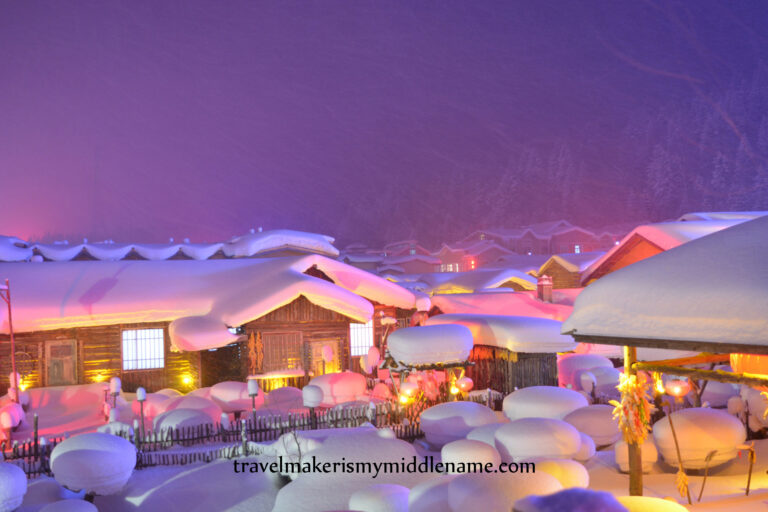
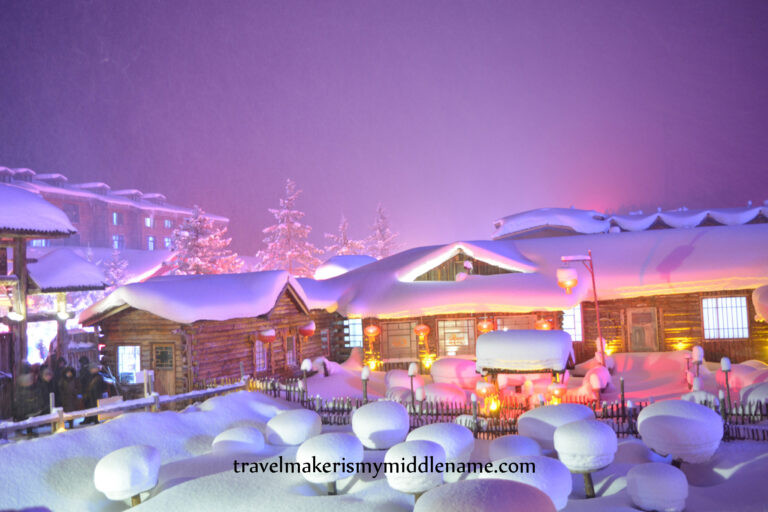
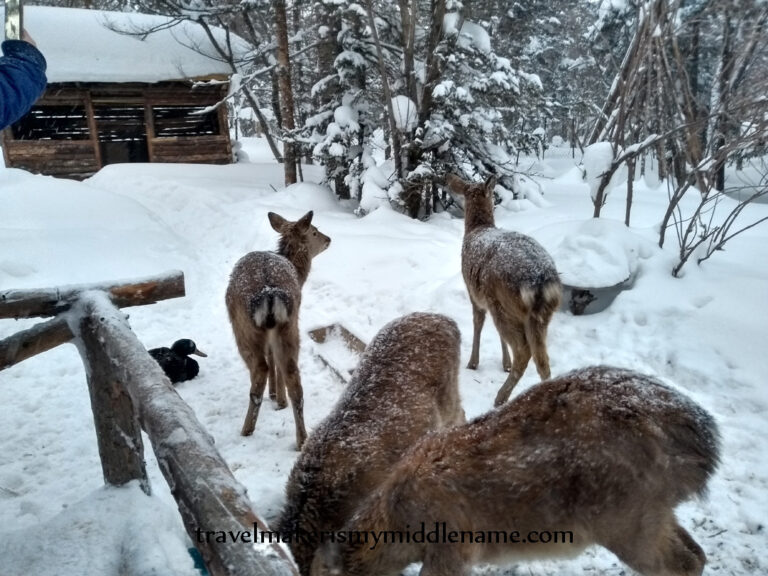
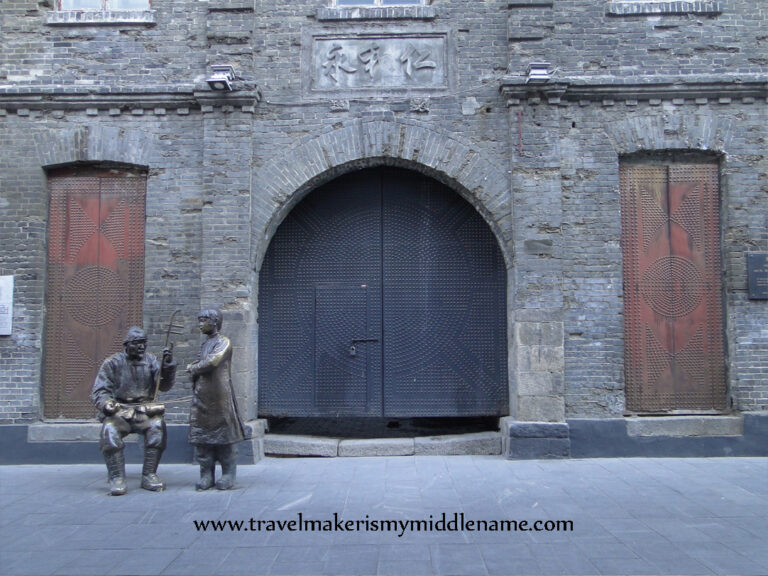
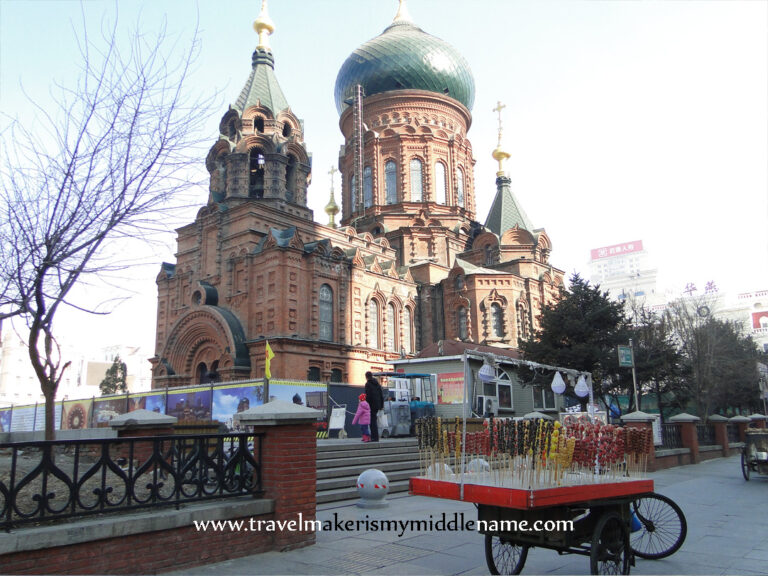
Highlights you'll visit:
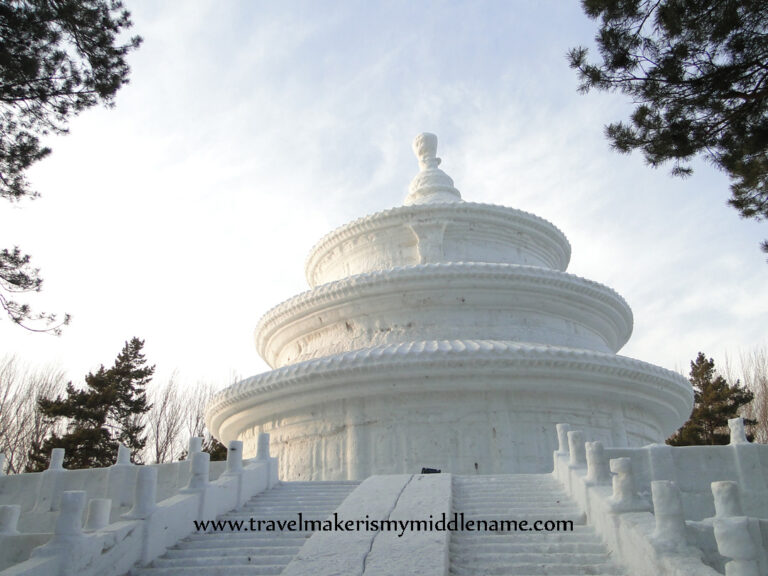
• Harbin: See massive snow sculptures
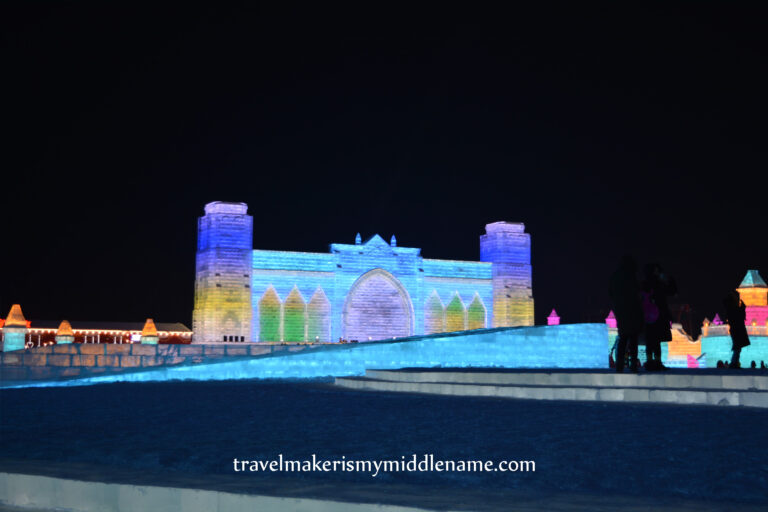
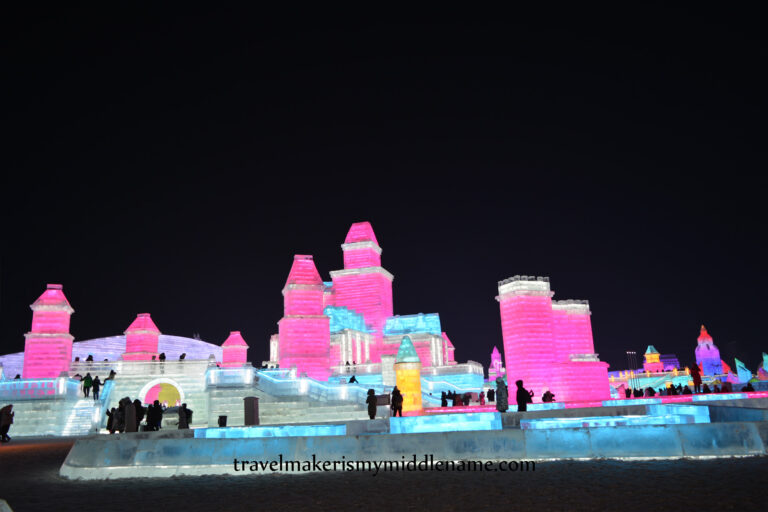
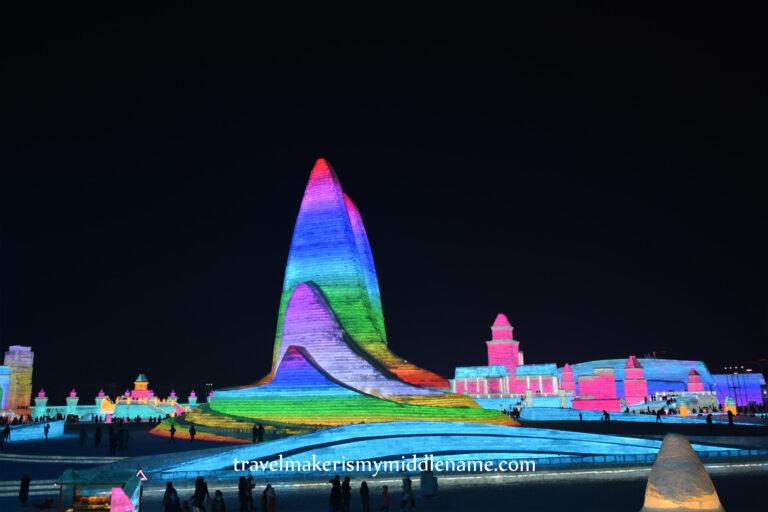
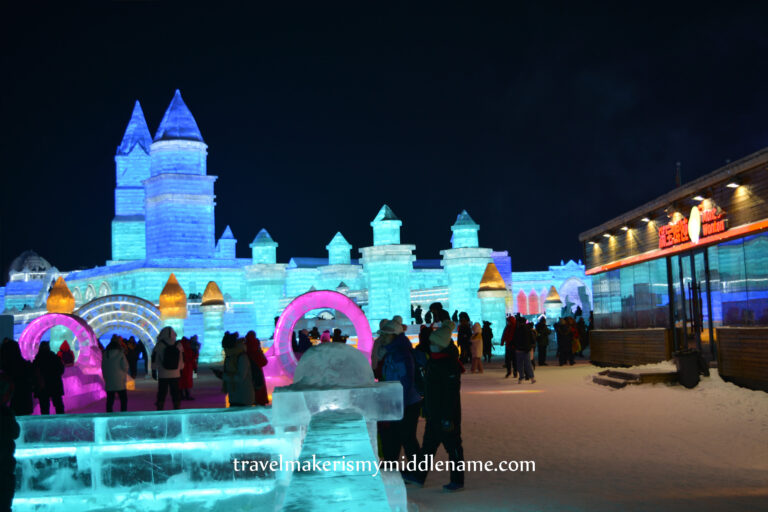
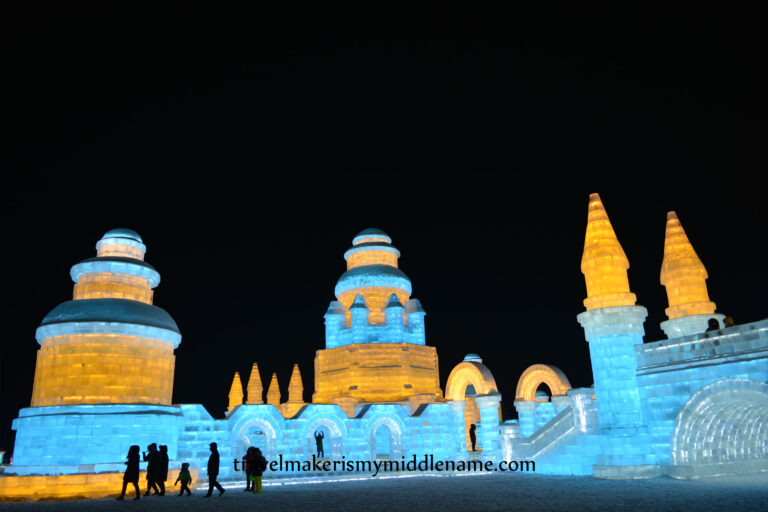
• Harbin: See life sized buildings and structures built out of ice harvested from the local Song Hua river. If visiting on New Year’s Eve, you can see fireworks!
• Stay in Snow Town, a scenic snow-covered village in a mountain 280km from Harbin city
• Go on a tour of the Unit 731 Museum, a historical museum dedicated to revealing the secret experiments conducted by the Japanese in World War 2. A must see for all history buffs and world war two enthuthiasts
Activities you'll do:
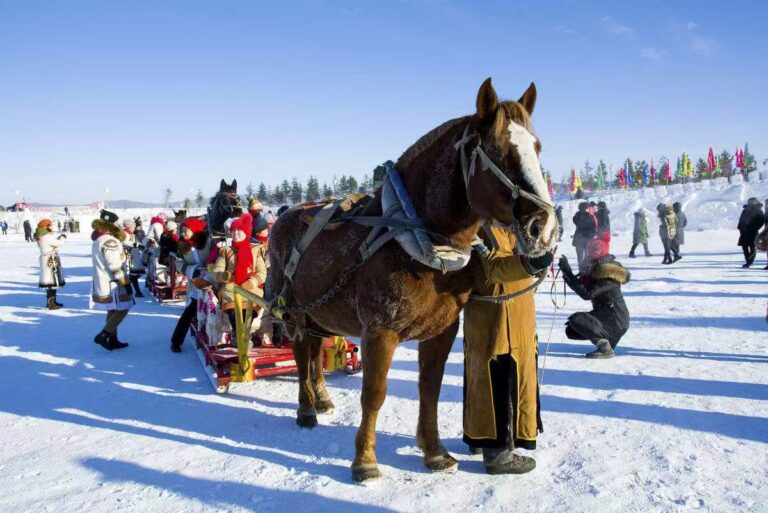
• Ride a horse drawn sleigh
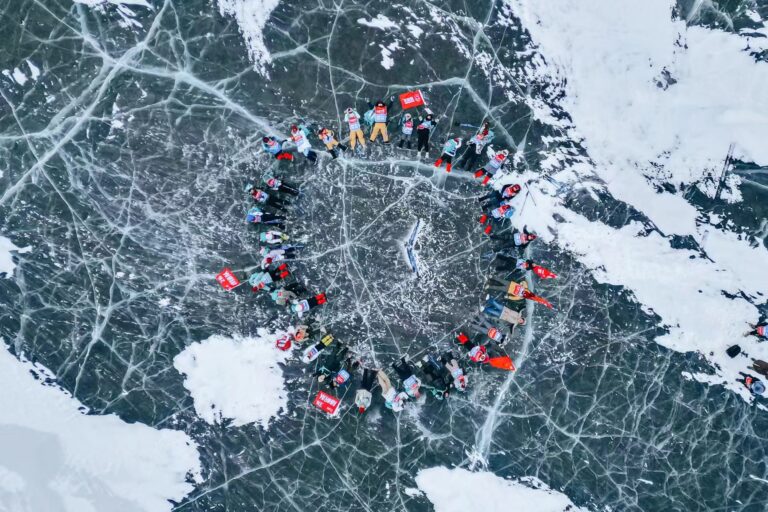
• Get your photo taken by a drone on a frozen lake
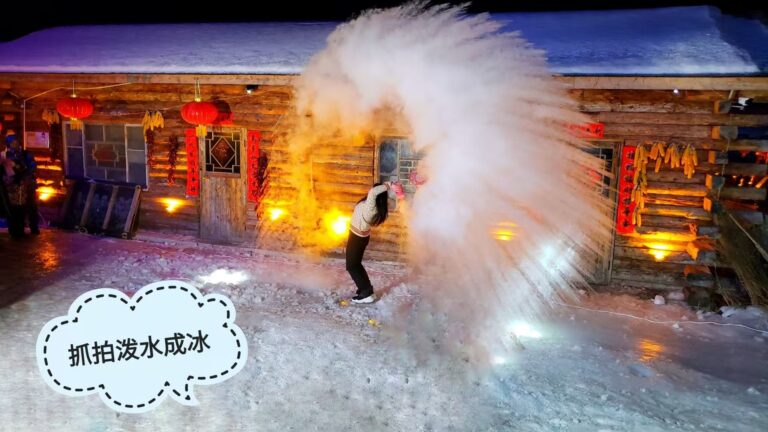
• Toss water, see it turn to snow
• Sleep on a traditional Kang bed
• Learn about the history of the Russian construction of the Trans Siberian Railway in north east China
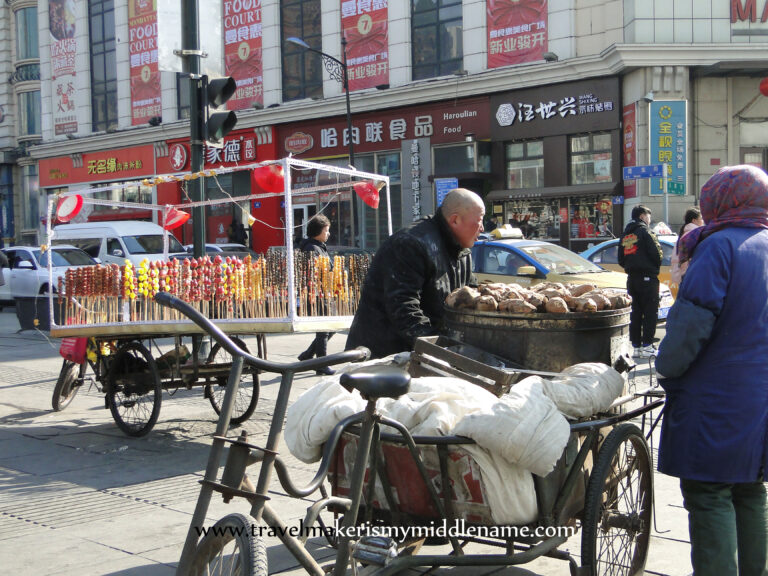
• Eat authentic local food like Guo Bao Rou, roasted sweet potato, and sticky rice buns
• Climb the roof of the Harbin Opera house
People per group:
10-20 or your own private group
Travel dates:
Travel dates depends on when the Snow Town scenic village is open, and when the Snow and Ice sculptures in Sun Island in Harbin is open.
As a guide:
December 26th – December 31 inclusive and January/Chinese New Year – – This is peak season. Mid-January is also peak season as it is school holidays in China. The exact date on the Gregorian solar calendar for Chinese New Year is different each year, sometimes it is in January, sometimes February.
Tours depart daily but are subject to minimum participants. Please enquire with expressions of interest for opening dates and number of people travelling.
Indicative price:
Snow Town is a remote village on top of a mountain without a local train station, it can only be reached via modern sealed winding roads by cars. Supplies have to be brought there by road transport, and the available accommodation changes each season since local businesses there are privately owned and operated.
Therefore prices for all resources and facilities (food and accommodation) will change seasonally, and even local tour operators will not know the prices of things until after the scenic area is open. Prices of everything is updated each season. Therefore the price changes each season and estimates are always based on the last season’s prices. When I joined a tour group in December 2019 to go to Snow Town, I asked for several available dates and their prices, and when I found one that matched available flights, I locked in the price by booking that date.
The indicative price from previous seasons is around $2,000 AUD per person twin share in peak season, $1,500 AUD in shoulder/low season for a group of 10 people, and is affected by group sizes and actual dates of travel. This price does not include international flights. Price may increase or decrease based on number of travellers and season and is the Australian dollar equivalent of Chinese Yuan, and is subject to fluctuation.
Note: The majority of Snow Town and Harbin’s Snow and Ice Sculpture season (November to February) coincides with China’s Chinese new year and the New Year period and is inherently peak season and therefore expensive. Low/shoulder season could be at the very start of the season during which time the snow and ice sculptures have not yet been completed (they are displayed fully outdoors and made outdoors and can only be made when it is cold enough to ensure the sculptures do not melt and cause a safety hazard). It is not predictable when the season will end, as it is weather dependent.
How far ahead do I have to book?
As previously mentioned, Snow Town is very popular so many tours go there daily; weather permitting, spots are limited by bus seats and more likely, accommodation availability. If you are joining a domestic Chinese tour group, it is just as likely that one specific date is booked out, as it is that several other dates has a spot or two left. So if you are flexible with your dates, you can book just a few days in advance, like I did in December 2019.
Harbin on the other hand, is more flexible, because the sites are in the same city as the airport, and there are more accommodation options in the city than in Snow Town. If you are travelling to Harbin independently, you are more limited by whether the snow and ice sculptures are still available or not, rather than whether a tour has a spot for you.
Destination overview
What is so cool about north east China?
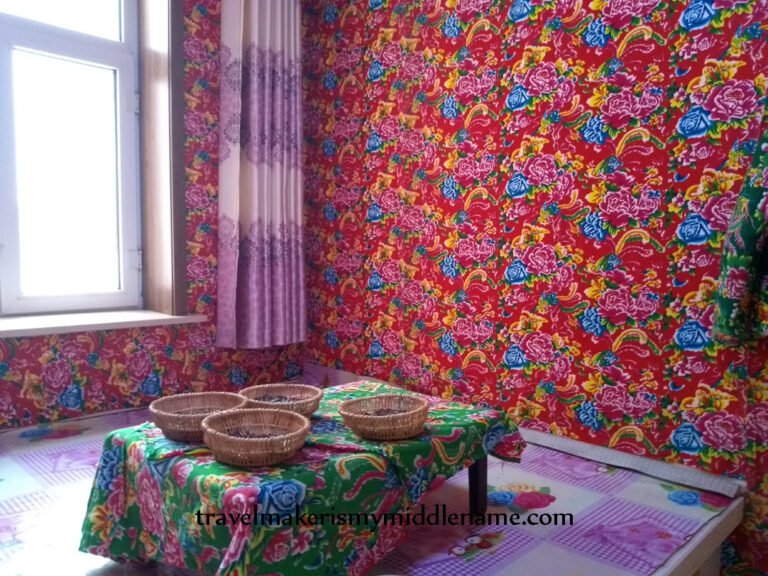
China is a vast country in terms of geography, culture, cuisine, and climate; each distinct region has its own characteristics it is known for. The region of North East China is known for its warm hospitality, down to earth people, hearty food, and very cold winters, where it regularly gets to -30°C (-22°F). Despite the cold, North East China is a well developed area and is THE destination for winter holidays for domestic tourists in China, and caters well to travellers and well prepared for winter, and is the home of the Kang bed – a built-in brick bed topped with blankets with a fire underneath that warms the bedding, heats up the entire house, while also powering the stove, a highly practical and effective heating method in traditonal North East Chinese homes.
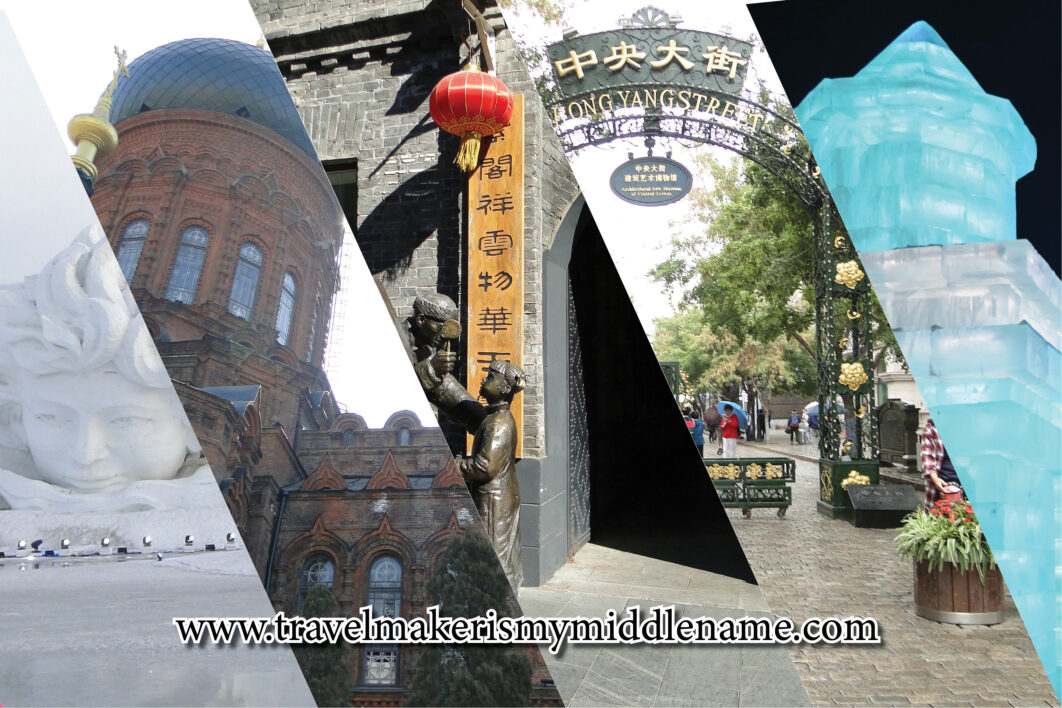
About Harbin
About Snow Town
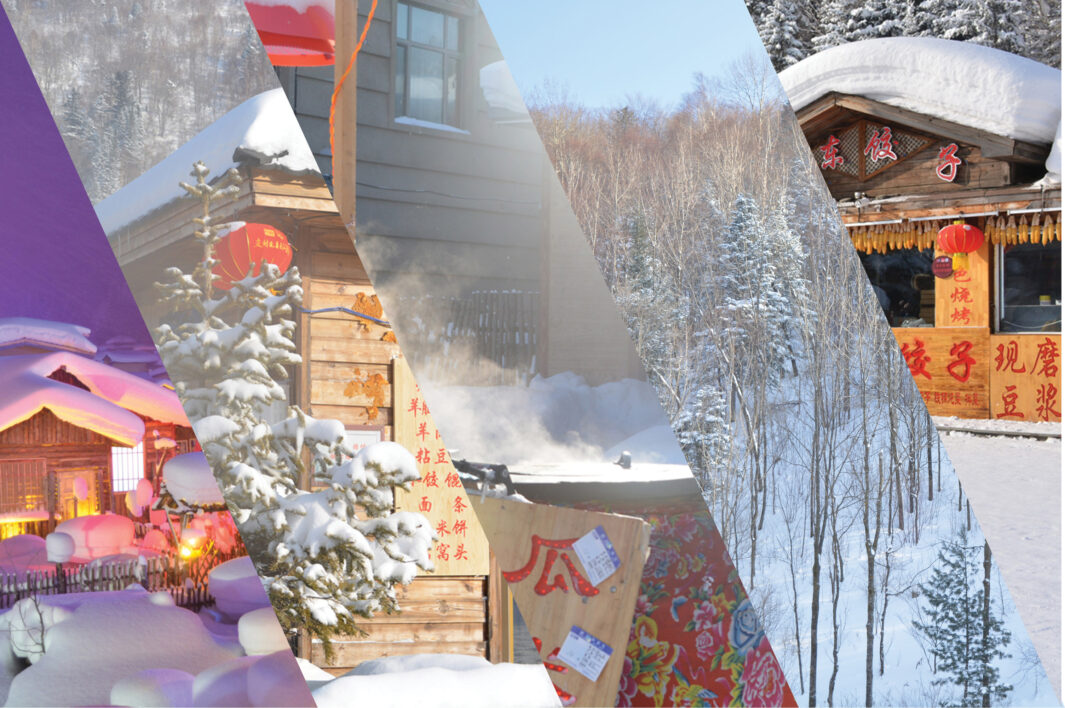
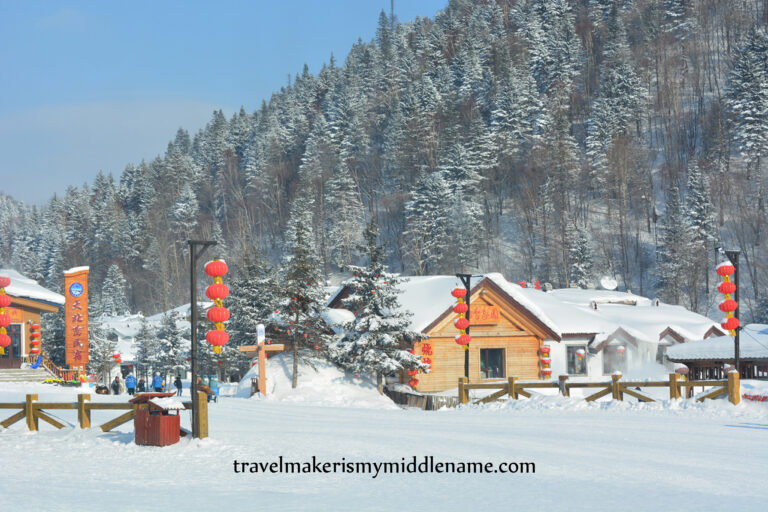
Snow Town is a small mountain village in Heilongjiang, about 280km from Harbin. It is home to a few local residents but became an official national scenic area due to its natural beauty and unique offerings. As evident from the name, Snow Town is covered in deep snow in the winter, which is becoming a more and more rare sight in the cities. Among its many offerings, visitors can enjoy the snow scenery, and participate in a unique activity of “water tossing” where you can make your own instant snow by throwing water, which is possible due to the extreme cold. Its remote location means prices there can be expensive, so to get the best value and ease of getting there, join a tour.
About Mudanjiang

Mudanjiang is another city in Heilongjiang, closer to Snow Town but smaller than Harbin.
“Mu Dan” is Chinese for the peony flower, and “Jiang” means means “river”, so the name Mudanjiang (Mu Dan Jiang) literally means “Peony River” and is aptly named after the river which it sits on the banks of, the Mu Dan River. The peony used to be China’s national flower (the national flower is now the plum blossom), and is still a national symbol and artistic floral motif. In DongBei (the North East), the peony is used in iconic “North East floral prints”, a hallmark design of north east China, which is used on wallpaper and textiles to decorate rooms and to make furnishings and clothes.
In Mudanjiang, visitors can try the local flatbread, and go on an informative tour of the Russian town and learn about the local part of the Trans Siberian Railway.
What is special about my tour?
Experience -30°C temperatures when you visit Snow Town, where it’s so cold, you can make your own instant snow by tossing water, and you have to eat your ice cream while it’s still “hot”! Confused?
In Harbin, there is a popular local ice cream brand called “Modern”. It is named after the hotel it was first sold from. It is particularly special when enjoyed in winter: since the ambient temperature is so cold (-30°C is very common), the ice cream is technically even ‘warmer’ than the air around it, so the inside joke is you have to eat the ice cream while it’s still (relatively) warm! In actual fact, the ambient temperature is so cold, the ice blocks are sold in buckets or containers instead of stored in freezers.
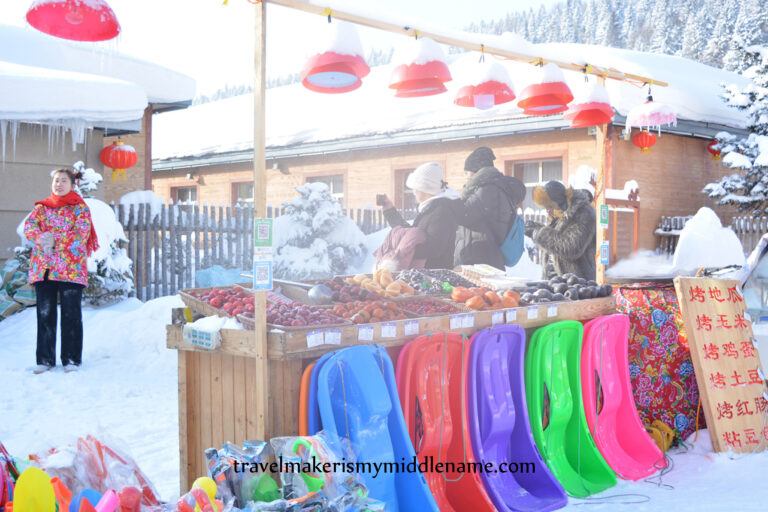
You’ll also have the opportunity to eat actual hot street food such as hot roasted sweet potatoes and steamed buns in the snow. North east China is also known for its generous servings of hearty and non-pretentious food and warm hospitality, well built warm interiors, and Kang beds. On this tour, you will get an opportunity to sleep on a Kang bed, subject to availability.
Logistically, visitors to Snow Town have to join a tour group to go there. As there is yet to be a direct way for foreigners to arrange a trip to Snow Town, I have taken the hard work out of arranging such a trip by working with a local tour agency in China that accepts foreign tourists. Mandarin is a difficult language to learn, but have no fear, as the tour provides English-speaking guides that covers not only Snow Town, but also Harbin and Mudanjiang, in 6 days. With the introduction of the new 30-day visa-free entry for holders of passports from certain eligible countries, this is the perfect short holiday that is packed with sight seeing activities, history, and culture, and still include free time.
Instead of a cookie cutter tour, each group will experience a customised, private and personalised service. For example, instead of dining in a food hall with a pre-determined menu catered for large quantity of tourists, each group will experience a unique dining experience: the guide will make a recommendation of local dishes based on the number of diners in each group and give the best cost to benefit ratio, making sure that everyone’s tastes are catered for while being able to try out a larger variety of dishes.
You’ll also avoid tourist gimmicks: Traditionally, horses are used for transportation in north east China because cattle is precious and used on the farm to plough fields. Ordinarily, dog drawn sleds require many dogs to pull one person and a sled. For about ¥100, you can ride a sled “pulled” by a single dog in Snow Town along the main street helped along by a human guide… or you can join the tour and go on an actual horse drawn sleigh.
There are included photographers for certain activities so you can enjoy your time and not miss any photo opportunities. Have your photo taken during the snow tossing activity.
You’ll also get your personal photo taken on a frozen lake by a drone and the digital files to take home with you to print as you please!
Inclusions:
• Airport pick up
• 6 nights accommodation in 4-star hotels (Holiday Inn or similar in the city, equivalent local hotels in Snow Town)
• Daily breakfast, two lunches, two dinners
• Heated minibus or coach transport
• English speaking guide
• All applicable entry fees
• Drone photos
• Water tossing photos
• All activity fees
• Optional winter gear stock-up shopping trip – if you are from a warmer climate and do not have sufficient winter gear suited to the local environment which typically is around -30°C, this trip to a local outdoors clothing and gear shop is provided for your convenience. This is entirely optional and provided for your benefit, not I nor the tour guide or tour agency earns a profit from it, but it is *highly recommended* that you go if you don’t have winter clothing suited to snow, ice and -30°C environments.
Not included:
• International flights
• Self-paid communal meals (the guide will recommend a local restaurant for the group and each participant can order their own dish or contribute to a group fund for a communal dinner – Chinese dishes are made to be shared. This saves everyone time and decision making process in unfamiliar environments and allows you to try the recommended dishes)
• Spending money, winter gear purchase money, souvenirs
• Any meals not included
Save on visa fees!
China has introduced a visa-free policy for passports from these 50 countries. Travellers who hold passports from those countries can visit China for 30 days for tourism or business purposes, saving you the money and the hassle of getting a visa.
Bookings, Deposit, and Refunds:
Bookings, Deposit, and Refunds:
A deposit to secure your spot is required. At least partial payment of the tour is also required. The rest can be paid in cash to the tour agent upon arriving in Harbin, China.
You receive a full refund if you cancel within a generous 7 days, or a 50% refund within 5 days of the tour starting.
Itinerary
Note: the exact order of the activities in the itinerary is subject to change, due to for example weather. For safety reasons, the ice sculptures may close early if the weather gets unexpectedly warm.
Day 1 – Included Meals: none | Accommodation: Holiday Inn or similar
• Arrive in Harbin. Airport pickup according to flight arrival.
Early arrivals can go on an optional winter gear shopping trip*
Day 2 – Included Meals: Breakfast, Dinner | Accommodation: Holiday Inn or similar
• Optional winter gear shopping trip*
• Visit the St Sophia Cathedral, modeled on the Saint Basil cathedral in Moscow, Russia
• Stroll along Central Street
• Visit Sun Island to see the snow sculptures
• Welcome group dinner
Day 3 – Included Meals: Breakfast, Lunch, Dinner | Accommodation: Local hotel
• Depart very early to go to Snow Town by bus
• Activities and sights of the day include Ice and Snow Avenue (a scenic boardwalk among trees and winter landscape)
• Ride a horse drawn sleigh
• Visit Meng Huan Jia Yuan (a scenic cluster of houses in a separate village within Snow Town)
• Group dinner
Day 4 – Included Meals: Breakfast, Lunch | Accommodation: Holiday Inn or similar
• Enjoy the sights of Snow Town in the morning
• Visit Mirror Lake (Jing Po Lake) where you will have a local lunch
• Get your photo taken on a frozen lake by a drone
• Depart Snow Town and travel by bus to the city of Mudanjiang
• Optional communal dinner^
Day 5 – Included Meals: Breakfast | Accommodation: Holiday Inn or similar
• See Siberian tigers in a safe caged vehicle and enjoy the sights
• Arrive in Mudanjiang around lunch time, visit the Russian village, try the local flatbread, optional communal lunch
• Return to Harbin in the evening
Day 6 – Included Meals: Breakfast | Accommodation: Holiday Inn or similar
• Visit the Unit 731 museum – a history museum explaining the secret experiments run by the Japanese in World War 2
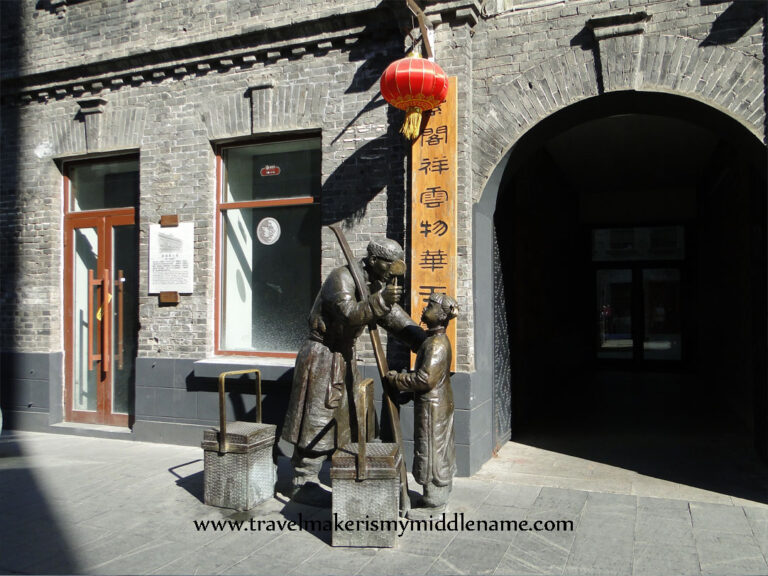
• Visit Laodaowai, an area of town where local Chinese people lived while Russians built the Harbin portion of the Trans Siberian Railway
• Visit the Harbin Opera House and climb the roof
• Visit the International Ice Sculptures Festival
• Return to accommodation for the night, check out next morning.
Tip!
The ideal time for the best experience is from December 26th to December 31st inclusive, as there are New Years Fireworks at midnight of January 1st which can be seen in Sun Island at the Ice Sculptures. This is also the middle of the season and when activities are well underway, however, is the most expensive time.
Important Notes:
1. The exact order and availability of activities may change depending on many factors such as, but not limited to, weather and availability/venue operating times.
2. *The winter gear shopping trip is not compulsory, it is entirely optional and provided only for your benefit, no profit is made from this. Please note that temperatures in winter in North East China is easily and typically around -26°C to -30°C and if you are not used to such low temperatures, or your home country climate means appropriate clothes and gear is not available, it is **HIGHLY** recommended that you buy some local clothing and gear upon arrival that is made specifically to suit the local climate. Very cold winters are a fact of life and a normal phenomenon in North East China and the local clothing and gear there are everyday items that are made for the local climate and are both effective and affordable.
3. ^A communal dinner is a dinner at a local restaurant of the group’s choosing or guide’s recommendation with the entire tour group where everyone orders from a menu or has a say in the dishes to order and pays for themselves or splits the total bill, rather than a cookie cutter dinner made for tour groups. This allows everyone to buy and try more dishes when pooling dining funds and purchasing together and the ability to try authentic local cuisine, as opposed to mass produced simple food made only to feed hoards of tourists in a hall, which is typical in many tours.
4. Fitness level: Low, occasionally moderate. There is walking required but the participant can decide how long or far to walk, sometimes up to 700m at a time but at a leisurely pace eg strolling. Distance between metro station to Unit 731 Museum is around 550m if transport will be by metro. Walking will be on paved and flat, outdoor sealed surfaces (eg streets and sightseeing in Harbin and Mudanjiang city), indoors (eg museum), as well as snow surfaces outside (eg at the ice and snow sculptures venue, in Snow Town, nearby scenic areas, frozen lake, footpaths and walking tracks, wooden boardwalks) which may include some uneven surfaces. The climb at the Harbin Opera House is simply a ramp that goes over the roof from ground level and may include some steps, this activity is optional. Please note, it can be windy at the top of the Opera House.
5. There is no minimum age, but for your own convenience, be aware of the fitness requirements, tour itinerary, and weather situations that might make it challenging to travel with very young children or the elderly/participants with mobility problems. I personally have avascular necrosis of both hips but I managed at the time by going slower and getting help from people.
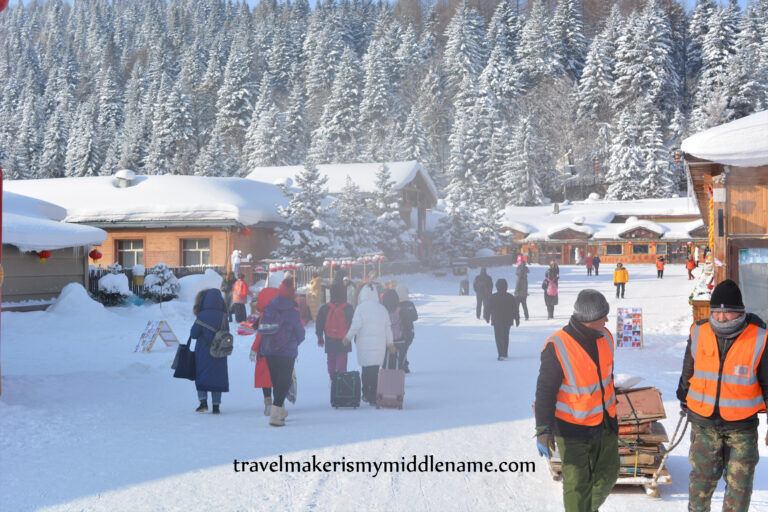
6. Bring minimum luggage: there is no vehicle access inside the village. Participants will be required to walk to and from their hotel upon arrival, and it can be difficult to move heavy/large suitcases on the snow covered ground (see pictures for an idea). Alternatively, you can store your luggage at the hotel in Harbin before departure to Snow Town if you have excessive luggage.
7. Accommodation: Participants will be allocated into twin or more shares per room of the same gender eg all females a room and all males a room. Typically, a Kang bed can sleep around 2-4 people depending on the room style. If you are travelling as a family or a group and want a room for all members of your party, please let me know. A single supplement might be payable if a single room is required or no roommate is available, you will be advised of this.
Questions and Answers
1. Can I join the tour from any country?
Yes. People from any country are welcome to join the tour, you just need to make sure you are in Harbin city, in Heilongjiang province, China on day 1 of the tour. On your first night, you will check in to the hotel in Harbin. Note that the tour does not include international flights to or from Harbin.
2. How cold is -30°C?
To put -30°C into perspective, commercial walk in freezers are about -18°C. Laboratories and blood banks have walk in freezers of around -27°C. In Finland, -18°C is normal, and school children still go outdoors at this temperature, and only go indoors when the outdoors temperature is around -25°C to -30°C. If you are from Finland or a similarly cold place, you would be prepared for north eastern China. The local infrastructure is well designed to suit the area and is very efficient, so efficient that it might get stuffy indoors due to the high quality seals, you might even want to step outside sometimes. The air in north eastern China is not as humid in winter as it is in southern China, where the heating facilities aren’t the same as the ones in north eastern China, so it is common for people from the north to feel even colder in southern China where it might only be around -2°C, than they do in north eastern China, due to the higher humidity which makes you feel colder. If you are from a warmer climate altogether, then you may not feel this, and -30°C will be extremely cold (I went from north eastern China to southern China in winter and could distinctively feel it is warmer in the south. By the time I got to Kunming and Lijiang, I was wearing just a woolen jumper over my shirt outside). The key is to dress warmly and appropriately, which is why this tour offers an accompanied shopping trip for those without proper clothes to last the entire tour. Remember that people still go about their daily business in the local area, so it is definitely adaptable.
If you want to travel independently to North East China, I hope this information was helpful to you. If you have questions about my tour, or want to submit an expression of interest about this tour, please send me an email here.
If you found this article helpful, please make a donation.
I know these messages are annoying, but please don’t skip this. If you’ve read this far, please make a donation.
I am not just another blogger soliciting donations.
I didn’t suffer a sudden and visible accident like a shark victim, but I did suffer a crisis, and I am still suffering.
My crisis happened suddenly, 30 years ago, when my life and future was robbed from me when I underwent intense cancer treatment as a three year old. I had no say in any of this.
The passage of time doesn’t make it better, in fact, it makes it worse. As a result of my cancer treatment, I now live with multiple permanent and degenerative disabilities and chronic medical conditions and have been long term unemployed, and live in an unsupportive household. I make great efforts to create genuine, accurate and helpful content. I write all my articles personally, and take most of the photos on this website myself.
I started this website in 2015, back then it was a blog where I wrote about my trips, whether they were local outings or international trips when I could. My disabilities have made it dramatically more difficult to get around, but I have a wealth of practical travel knowledge that I want to share, so I am turning this site into an information site, so that travellers are armed with useful information about a destination before they go.
It takes me a long time to write these articles and to check they are factually correct, and it’s getting harder to get the motivation to even get out of bed.
Please donate to my personal fundraiser if you can, or share my fundraiser if you cannot. I wouldn’t be asking if I had other options, and if everyone pitched in, my goal can be achieved. You can read about me on my About page. Thank you.
©All rights reserved for all content and photographs, usage on 3rd party sites and to train AI in any way shape or form is forbidden without permission. Photos are taken by author unless otherwise stated and is available for licensing.
Related posts:
 Harbin: The ultimate winter destination for ice and snow enthusiasts
 -30ºC: The hottest winter destination of northern China
 How to go to China for a short holiday WITHOUT getting a visa in advance! (Updated August
 Your practical guide to German Christmas markets: What to see, do, buy, and eat
 Wuzhen Water town Scenic area, China
 Yun Shui Yao Tulou in Fujian, China