Last updated on July 18, 2026
Credibility guarantee:
✅ Based on first hand experiences
✅ In-person visit in the field
✅ Official sources included
✅ Realistic accessibility information
The construction of La Sagrada Familia has been officially completed on June 10, 2026 Barcelona time. Interior works will take a few more years.
La Sagrada Familia is a famous church in Barcelona, Spain that attract millions of visitors a year due to its highly unique design and long construction time of almost 150 years.
This article will tell you about some of the facts about the structure, my personal review, and a practical guide on visiting it.
- About La Sagrada Familia
- What to Expect Inside La Sagrada Familia
- The two towers of the church
- Is La Sagrada Familia worth visiting? – My Review
- Which tower of La Sagrada Familia should you go up, Nativity or Passion?
- Planning Your Visit
- Accessibility
- Recommended Itinerary/Suggested Visitor's plan
- How to get to La Sagrada Familia
- Tickets
- If you found this article helpful, please make a donation.
About La Sagrada Familia
La Sagrada Familia is a large church in Barcelona, Spain. The name “La Sagrada Familia” means “The Holy Family” in Spanish and refers to the family of Mary, Joseph, and Jesus.
Its construction started in 1882 and was completed on June 10th, 2026, with interior work still on the way, making it one of the longest ongoing constructions in the world. It underwent many design changes by many designers. Contrary to popular and wide spread belief, it was not originally designed by Antoni Gaudi but by Francisco de Paula del Villar y Lozano. Antoni Gaudi was only appointed later after the original designer, Francisco, was forced to leave due to public disagreements about its design. In fact, the construction started in 1882 but Antoni Gaudi did not join the project until 1883.
Additionally, Antoni Gaudi was also not the only designer who worked on this building, with several other designers taking over during its 140+ year construction. Antoni is only recognised as the “main” architect, perhaps because it is his main (but not all) design that is being currently constructed. However, credit should be given where it is due, so:
To date, there has been a total of 9 other architects that contributed to the design of the church; in ascending order from earliest to latest:
- Francisco de Paula del Villar (1882) designed the original church, although it had no resemblance to the style it is today, using prevailing designs of the day, Gothic style with buttresses, somewhat similar to the sideview of the Notre Dame Cathedral. He designed the Crypt, which is next to the main church and is free to enter.
- Domènec Sugrañes i Gras (1926)
- Francesc de Paula Quintana (1939)
- Lluís Bonet i Gar and Isidre Puig i Boada (1966)
- Francesc Cardoner i Blanch (1983)
- Jordi Bonet i Armengol (1985),
- Josep Maria Subirachs (sculptor who designed the Passion tower (1986), Isidre Puig i Boada (1986)
- Jordi Faulí (2012)
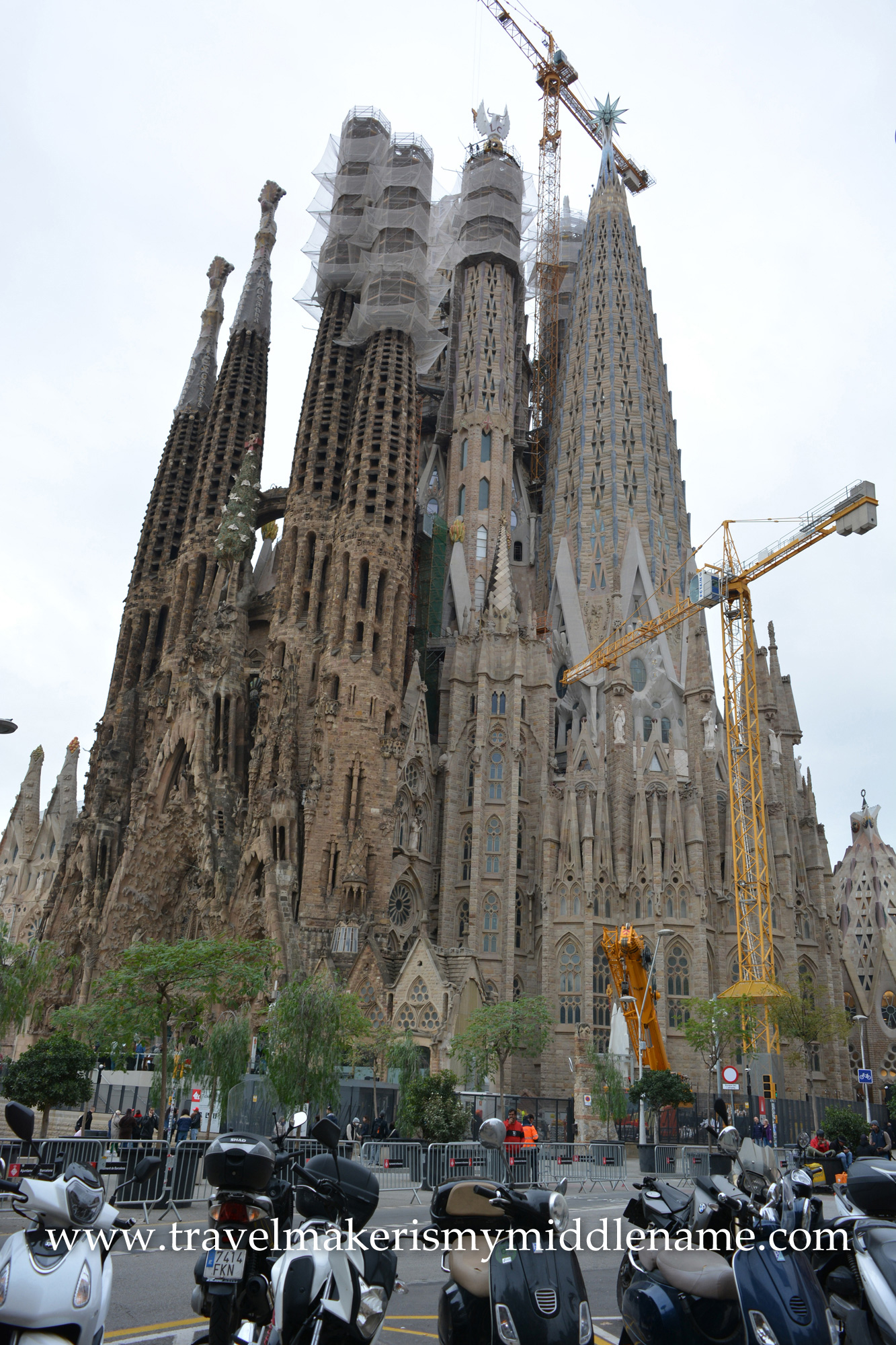
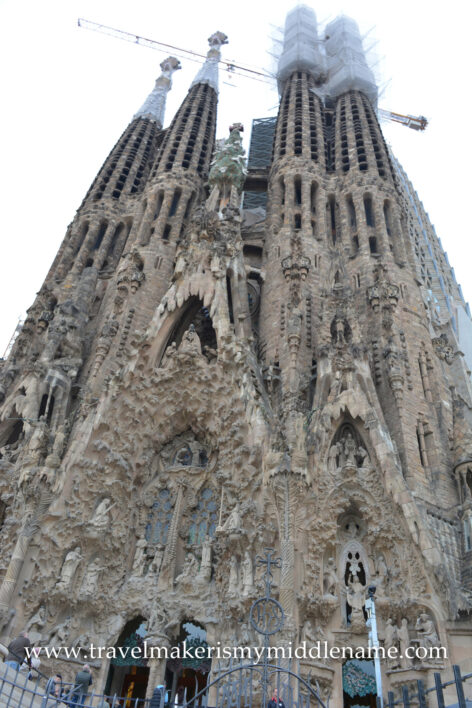
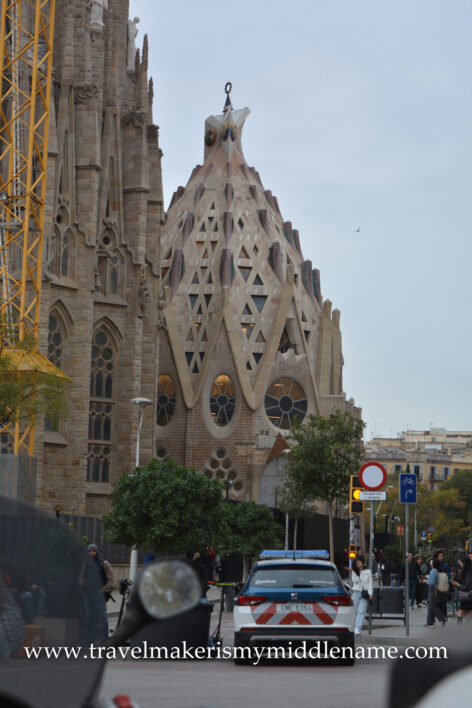
Today, La Sagrada Familia is recognised as a UNESCO World Heritage Site not only for its architectural uniqueness but also for its religious-cultural significance. The church’s chaotic and wild design is absolutely covered in relics and motifs from Catholic and nature themes. I akin this to a person already covered in tattoos still trying to find more space to squeeze more in, leading to an absolute jumble of a visual confusion that requires detailed inspection to see any meaningful detail. In a word, it’s ugly from the outside but more beautiful from the inside and upon detailed inspection.
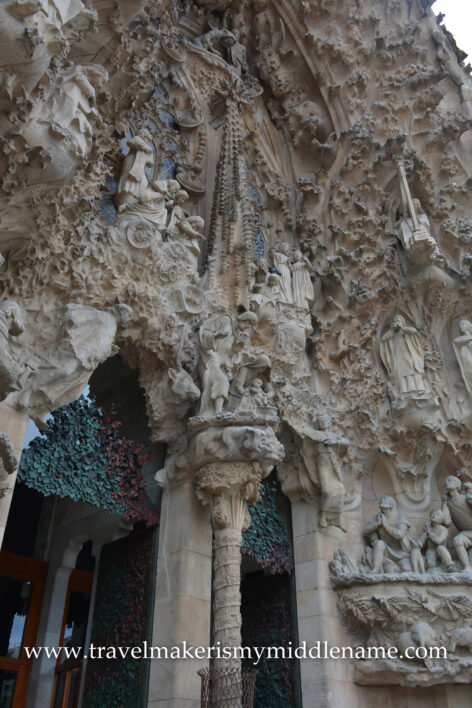
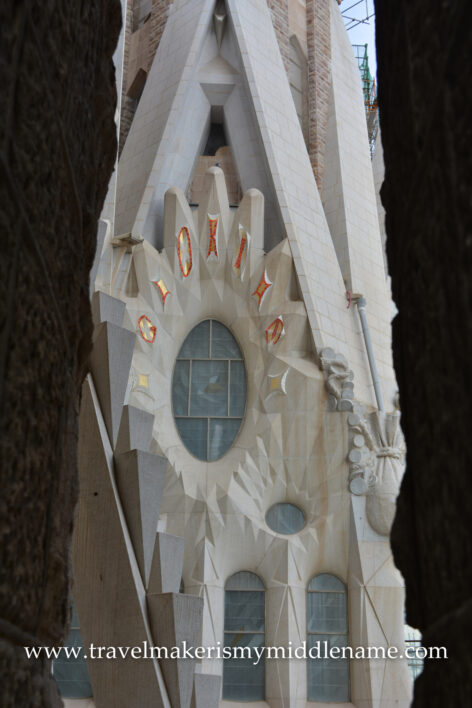
Specifically, Antoni wanted the design to evoke an “essence of creation” – to this end, visitors who carefully inspect the vastly complicated and chaotic designs on the facade carefully, will notice that it is covered in organic forms like leaves and fruit, and religious scenes like the nativity scene from the Christian bible.
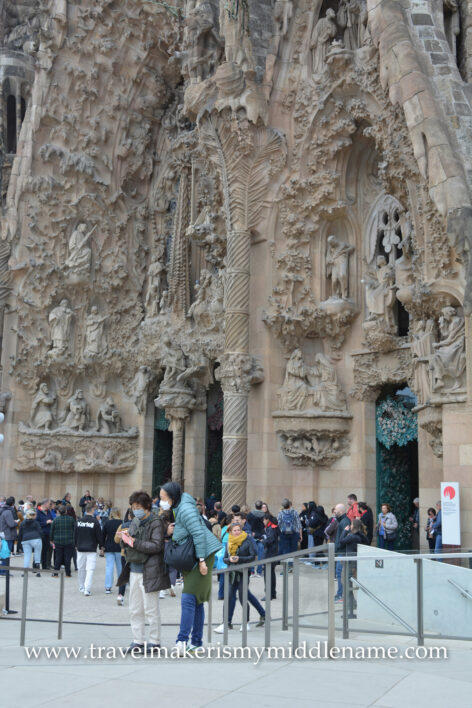
What makes La Sagrada Familia church different to all other European Christian/Catholic cathedrals and churches is that visitors must buy tickets to enter. This is due to a personal belief held by Josep Maria Bocabella, the original person who commissioned it: Josep wanted a church to be built as a place of atonement. Paying for an entry ticket was the way for sinners to atone for their sins. While there, I asked the staff whether entry will be free like all other churches when construction is complete. The answer? No.
What to Expect Inside La Sagrada Familia
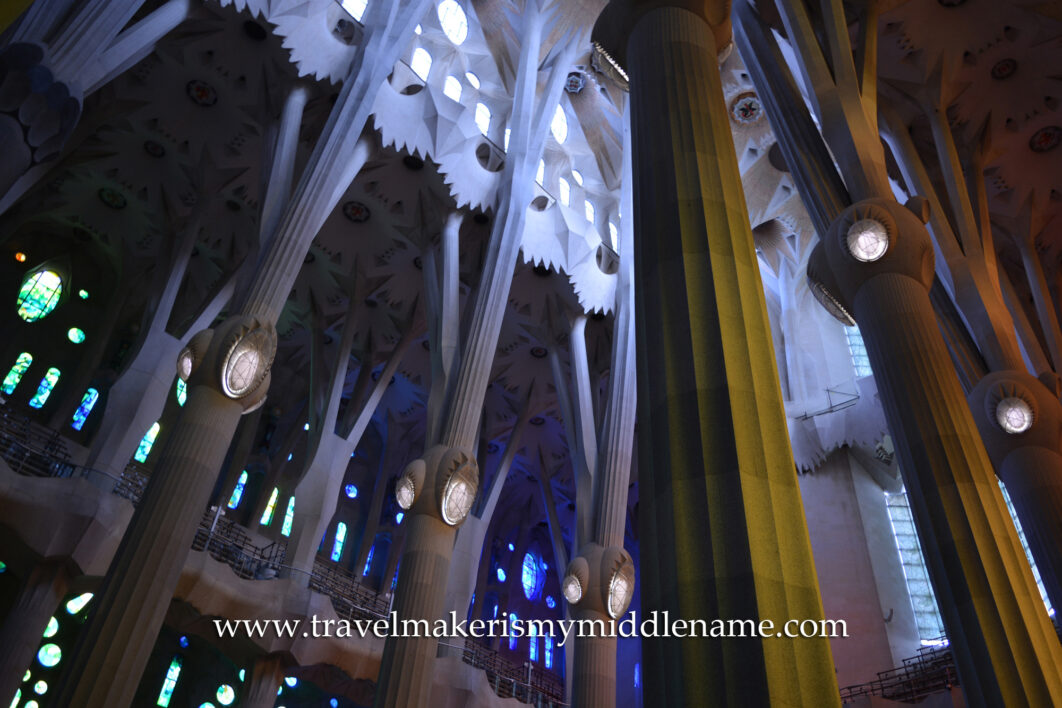
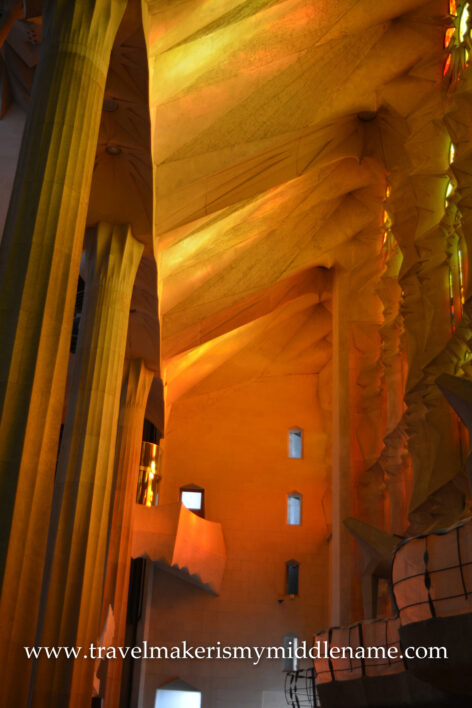
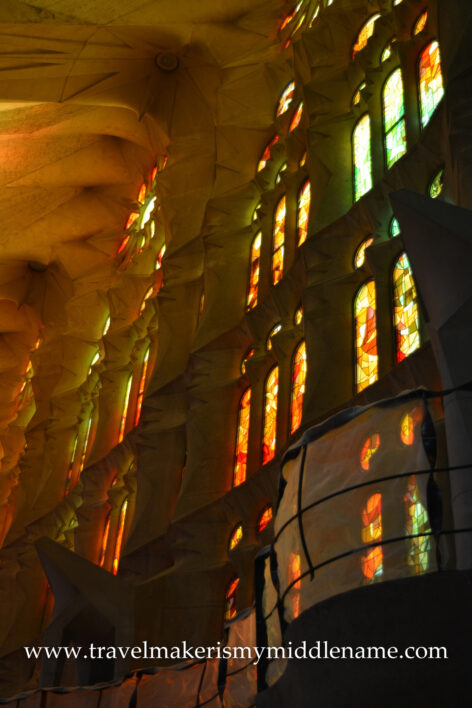
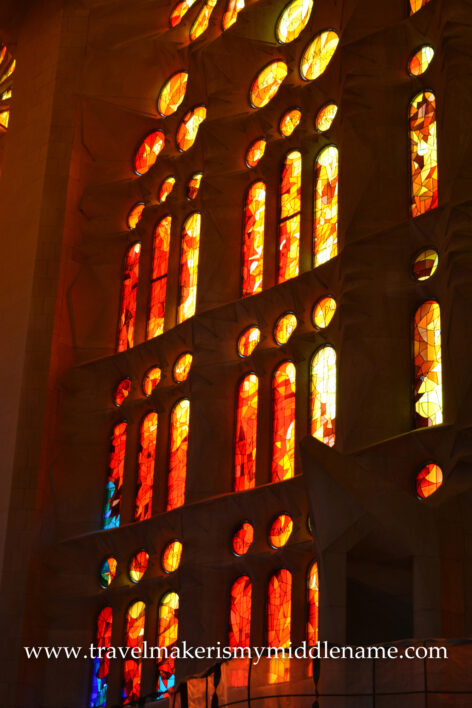
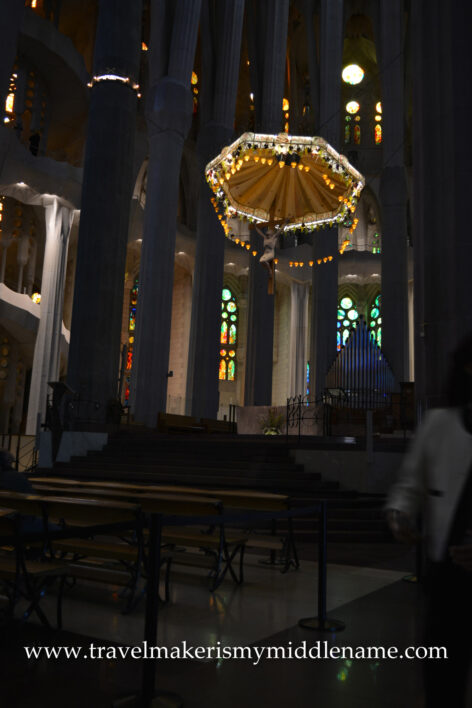
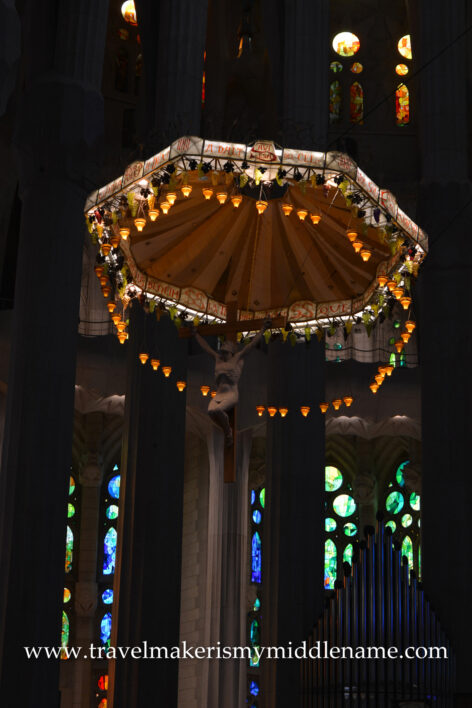
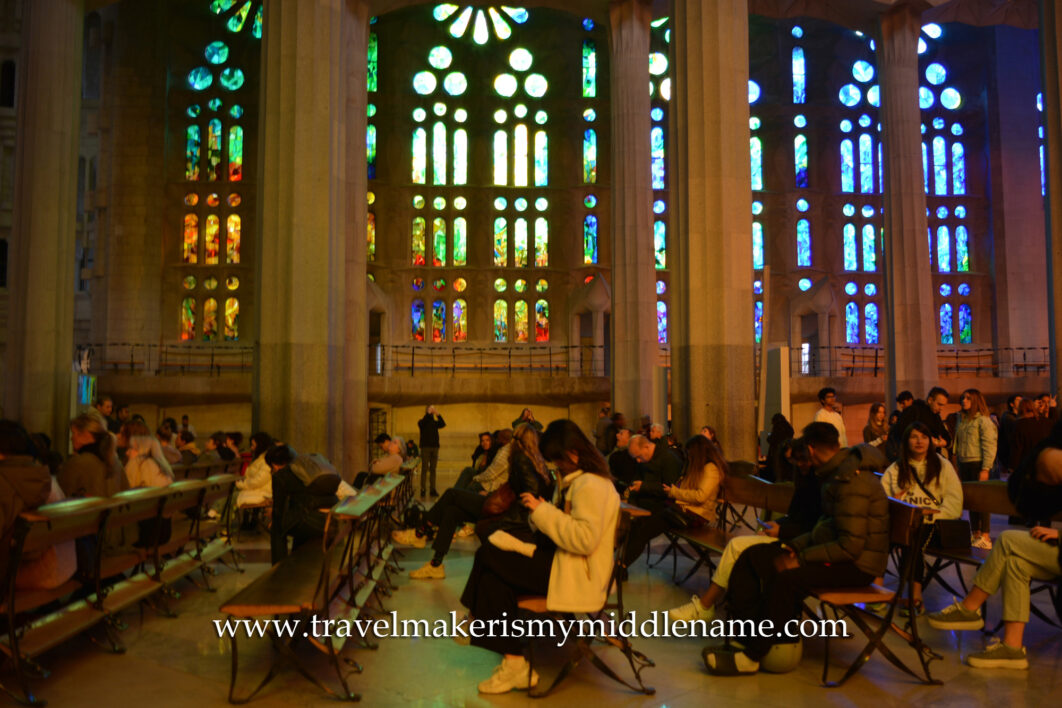
Visiting La Sagrada Familia in the summer is a remarkable experience. As you enter the basilica, thanks to its high ceilings, you will immediately feel the temperature difference between the outside and inside. If you are there in the afternoon at sunset, you will be able to see the light filter through the stained glass windows, that contain vibrant colours and intricate patterns.
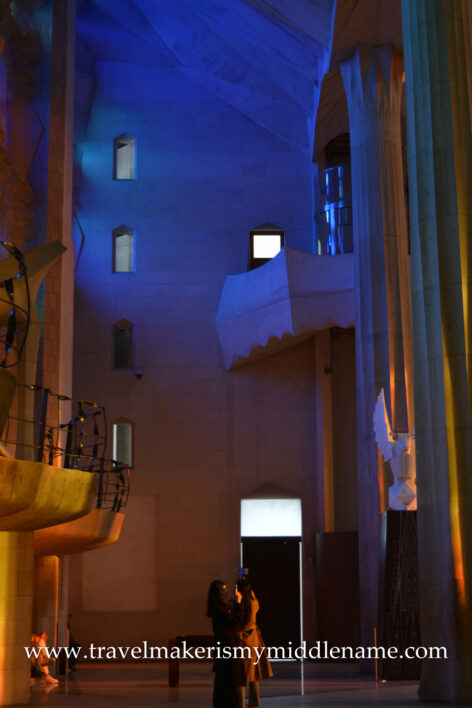
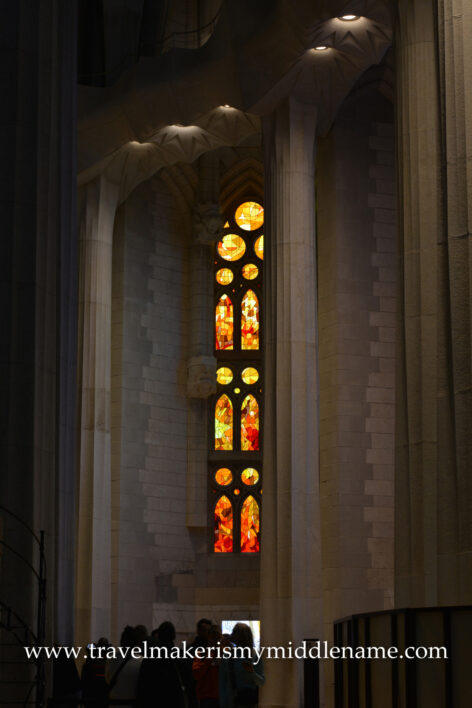
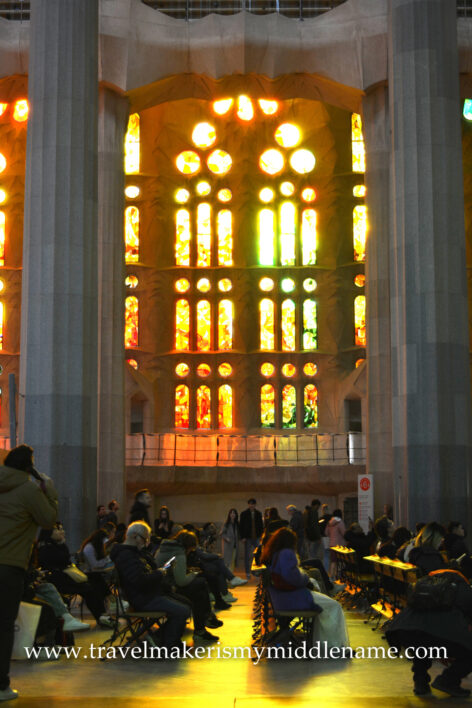
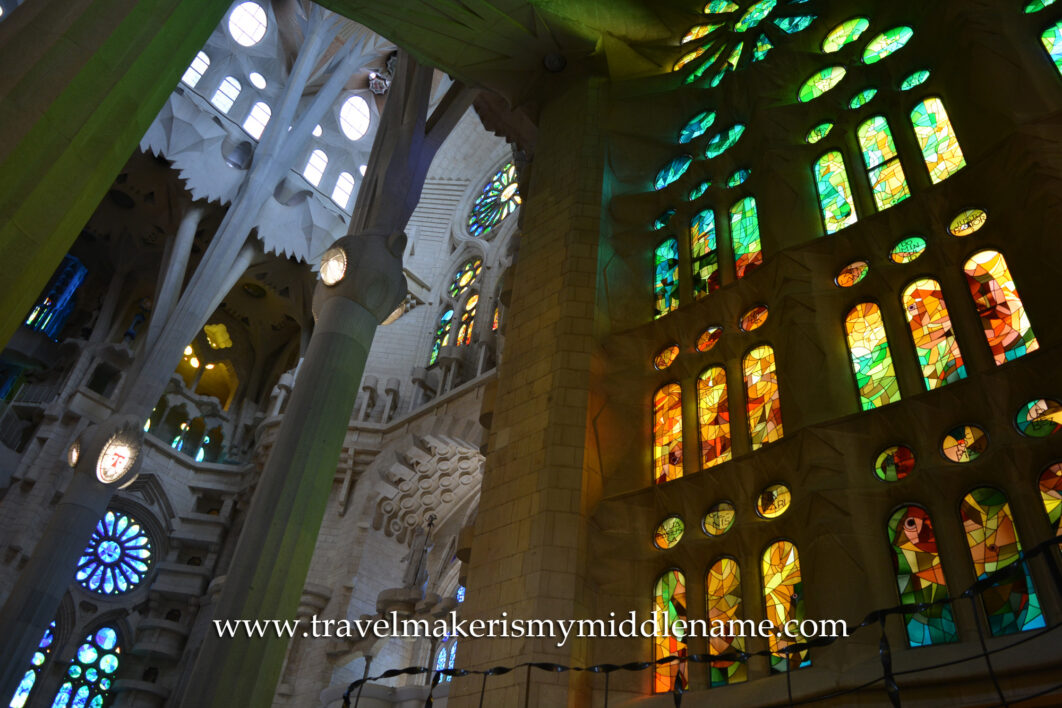
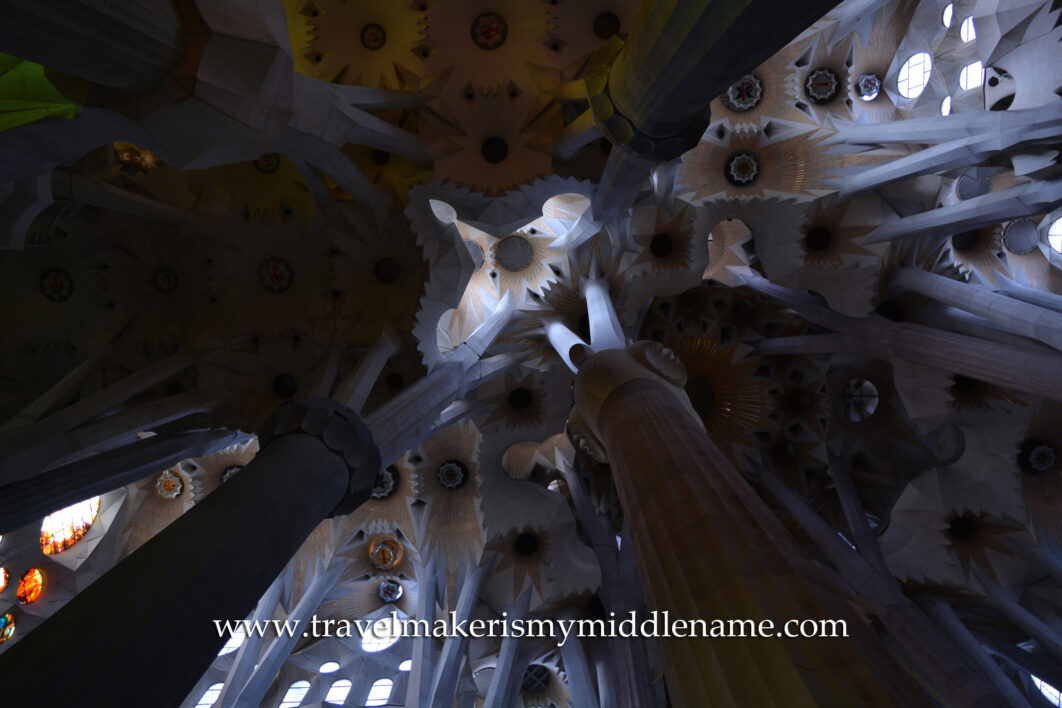
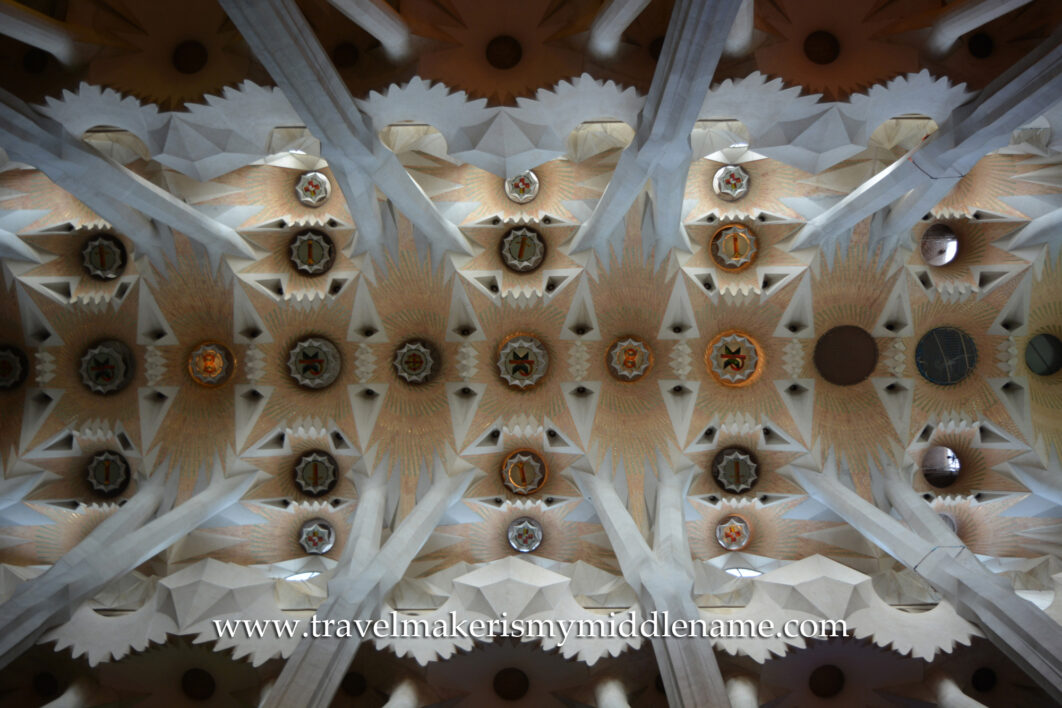
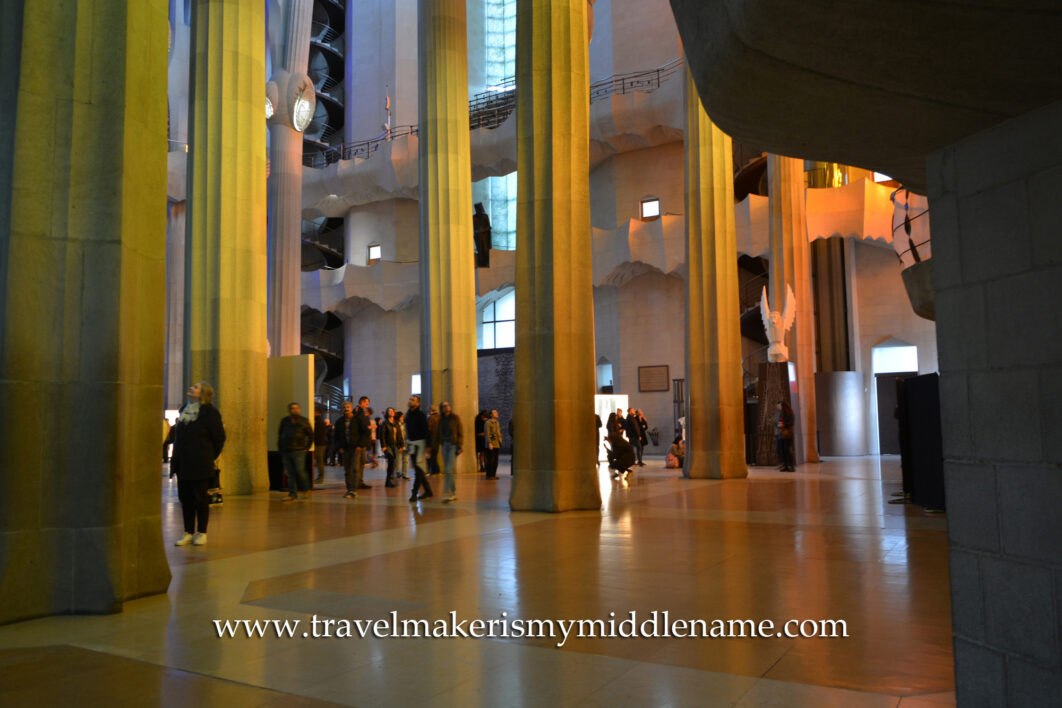
There is a seating area for those who want a rest. Walking around the interior of the church allows you to see the white columns spreading out like branches of a manicured tree, holding up the ceiling, which is exactly what Gaudi had intended the columns to represent.
On either side is a tower, accessed by an elevator to the top, where you can see Barcelona from over 100 metres above.
The two towers of the church
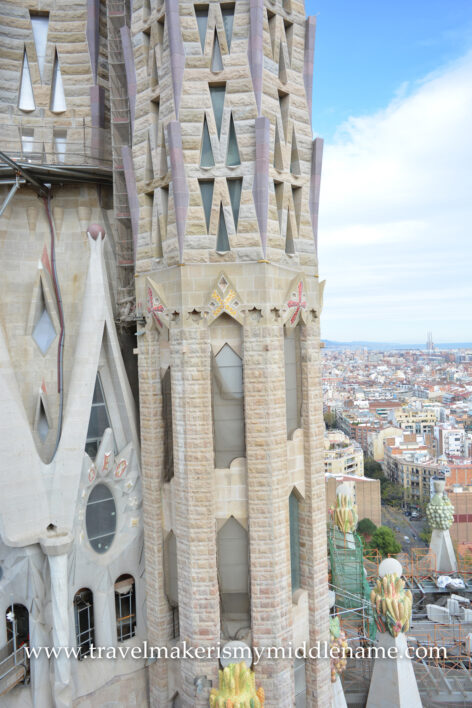
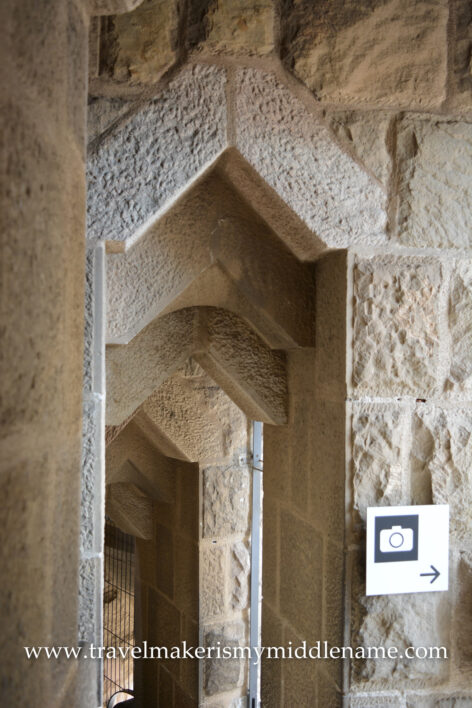
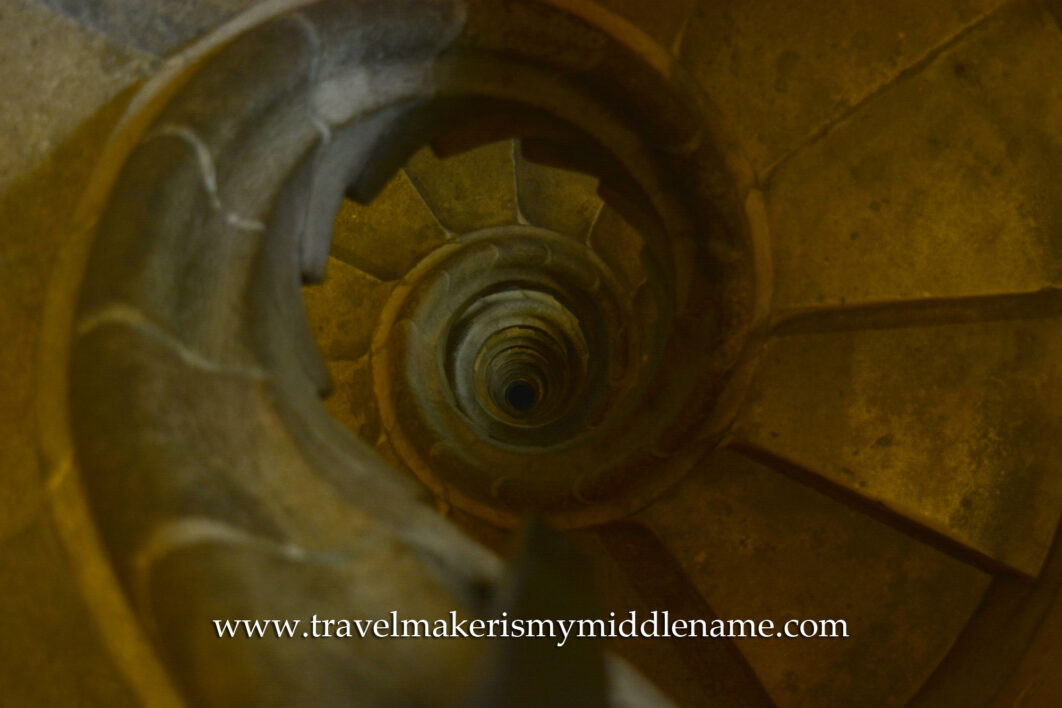
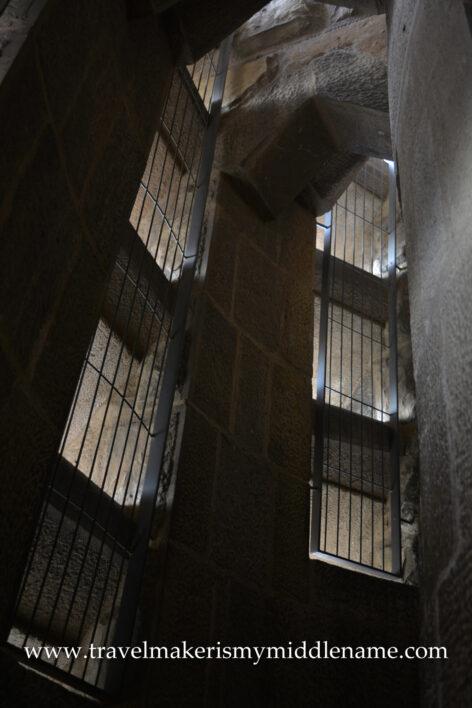
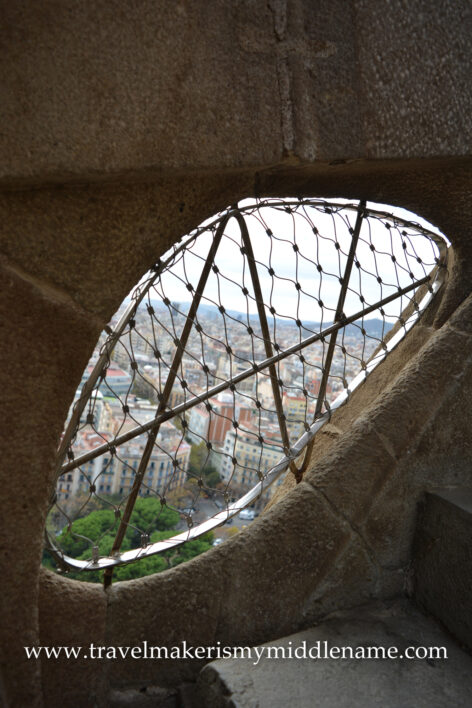
La Sagrada Familia has two towers, the Nativity and the Passion, that have a spiral staircase inside with small windows and lookout offering views to the streets below, and a view of artistic structures.
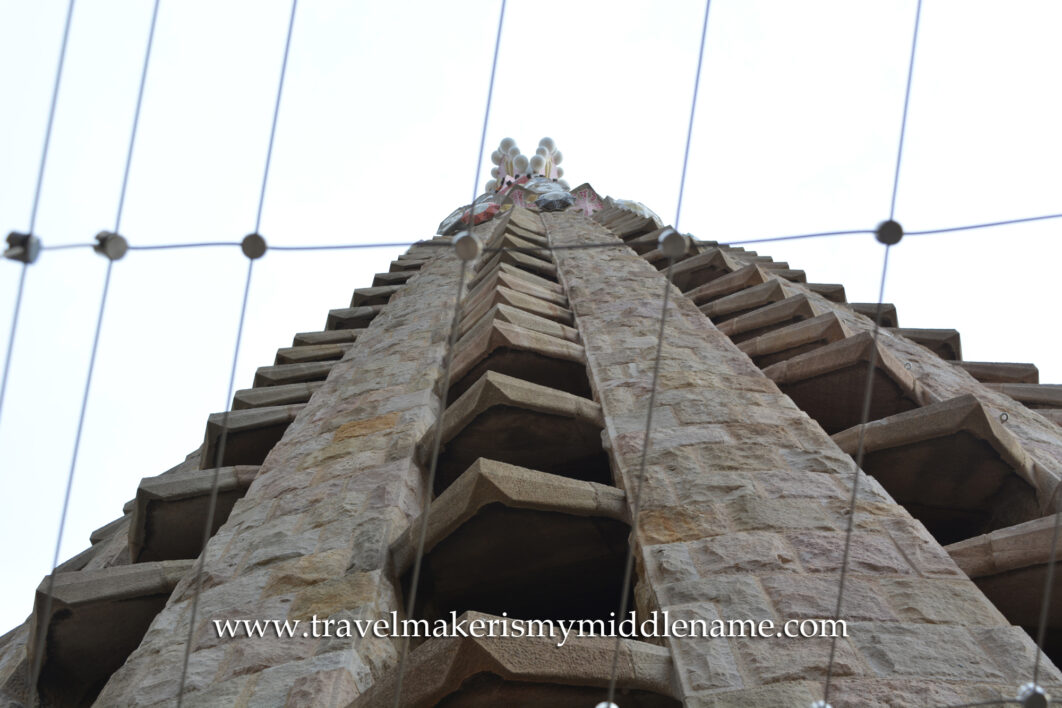
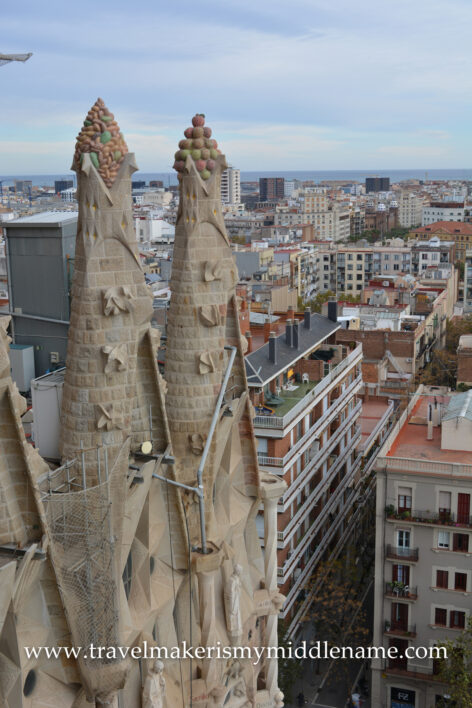
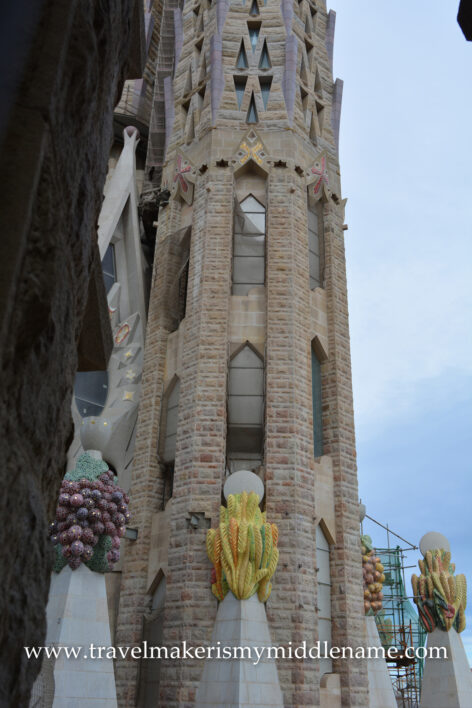
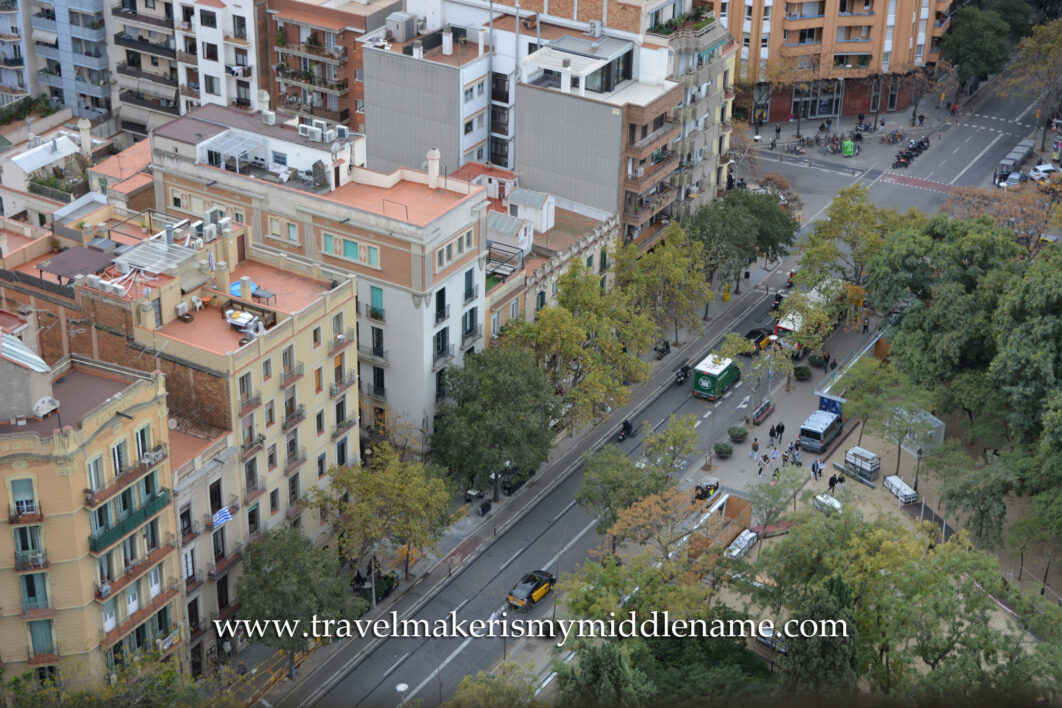
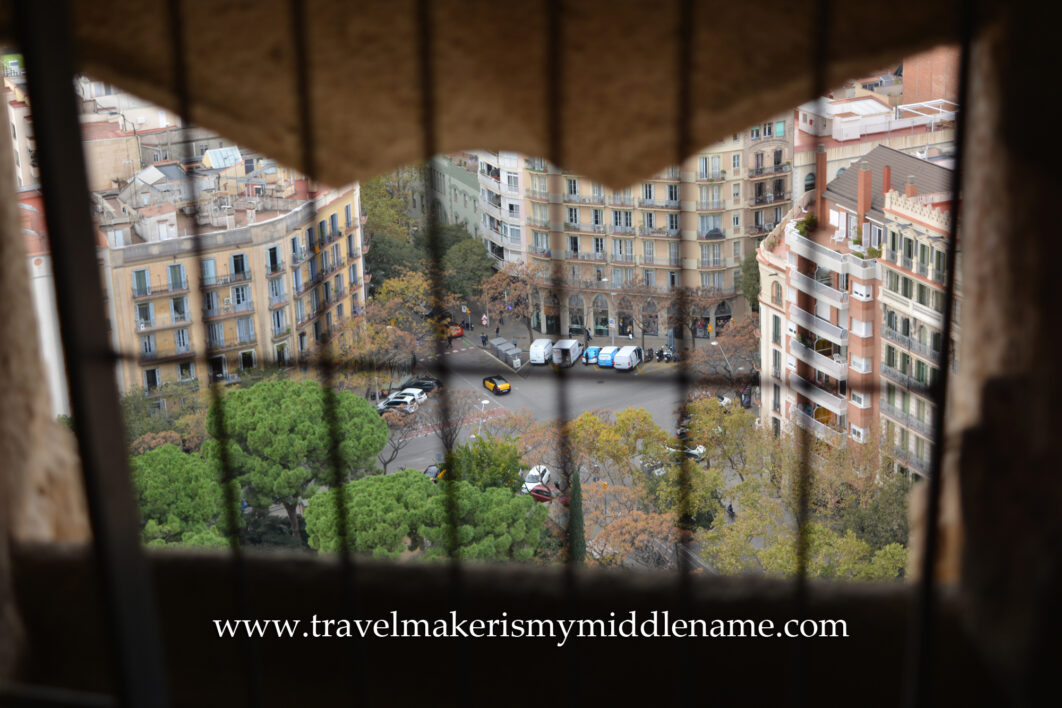
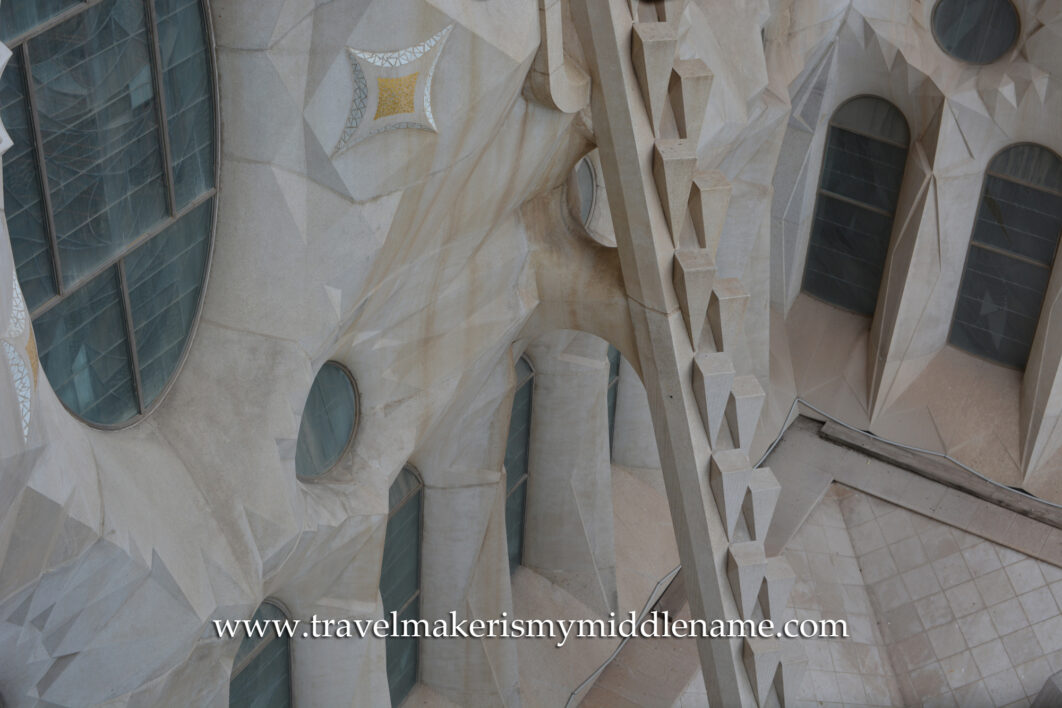
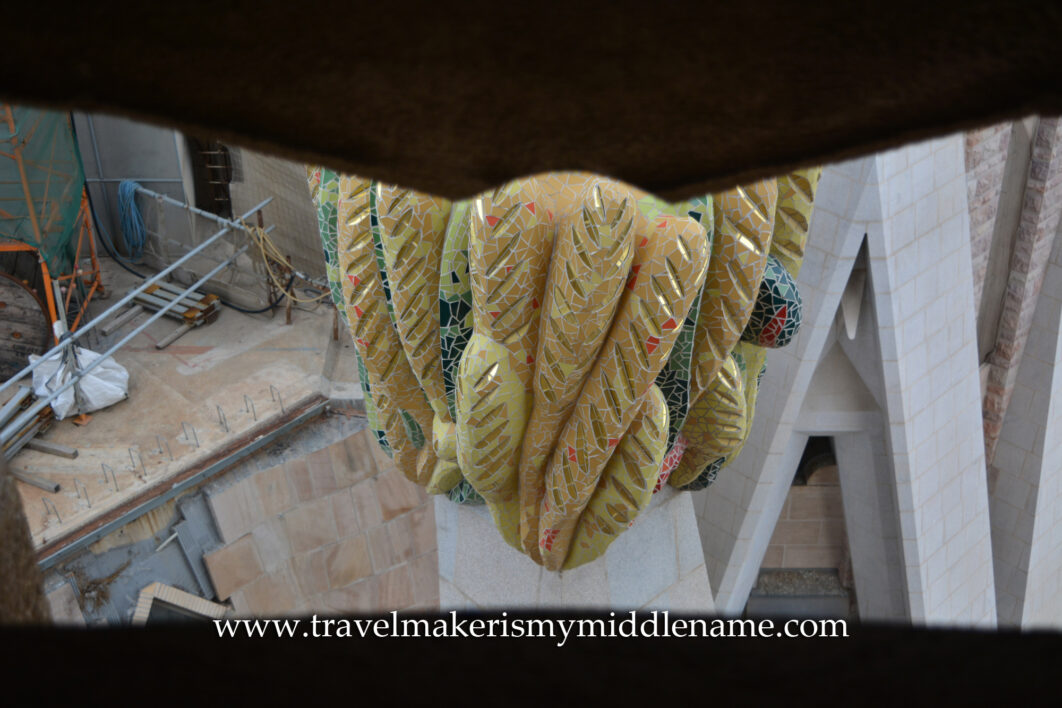
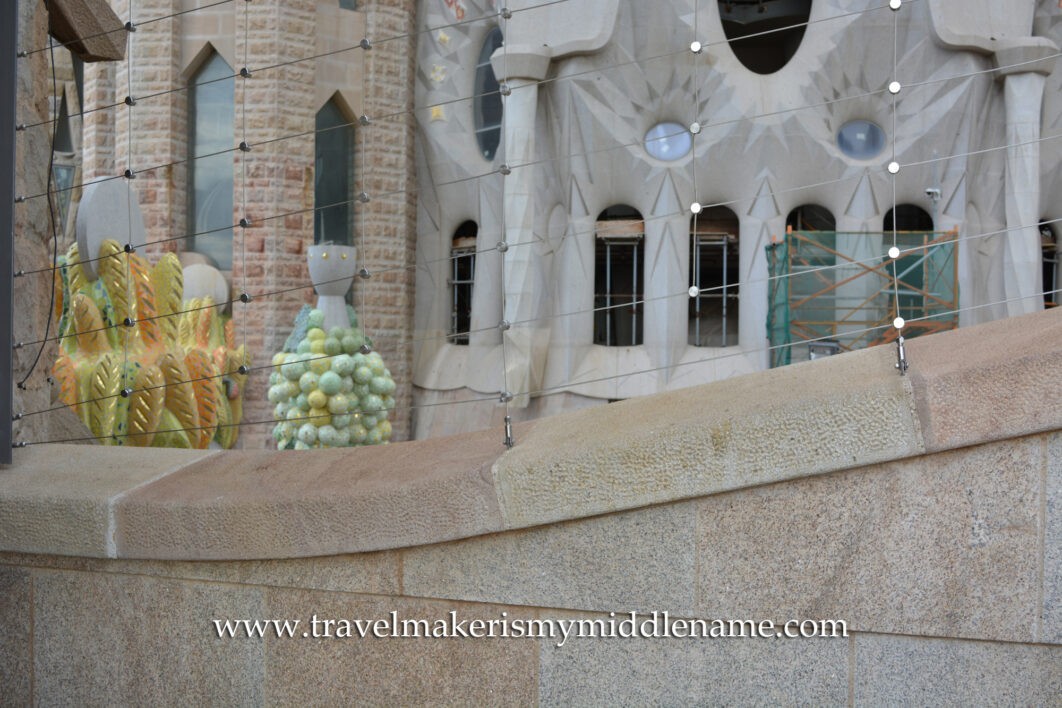
Ascending these two towers require separate payment on top of the entry to the church. The staircases are narrow and inaccessible to wheelchairs, but there are thin metal handrails. The lookouts and bridges are quite ordinary and like most other lookouts of stone castles – stone bridges exposed to the weather where it is extremely windy, and enclosed round spaces with small openings to look out. Additionally, the open space around the bridge is enclosed in metal wire fencing for obvious safety reasons, which unfortunately means it hinders the view and photo opportunities. The openings in the enclosed tower are also very small. These two elements means some of the main structures you go up to see, are easily missed or blocked somewhat by the metal wire, like the golden cubism style statue of Jesus and the white cross.
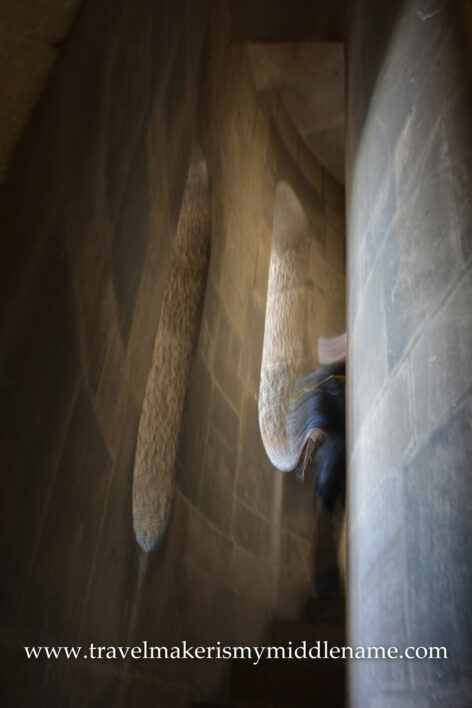
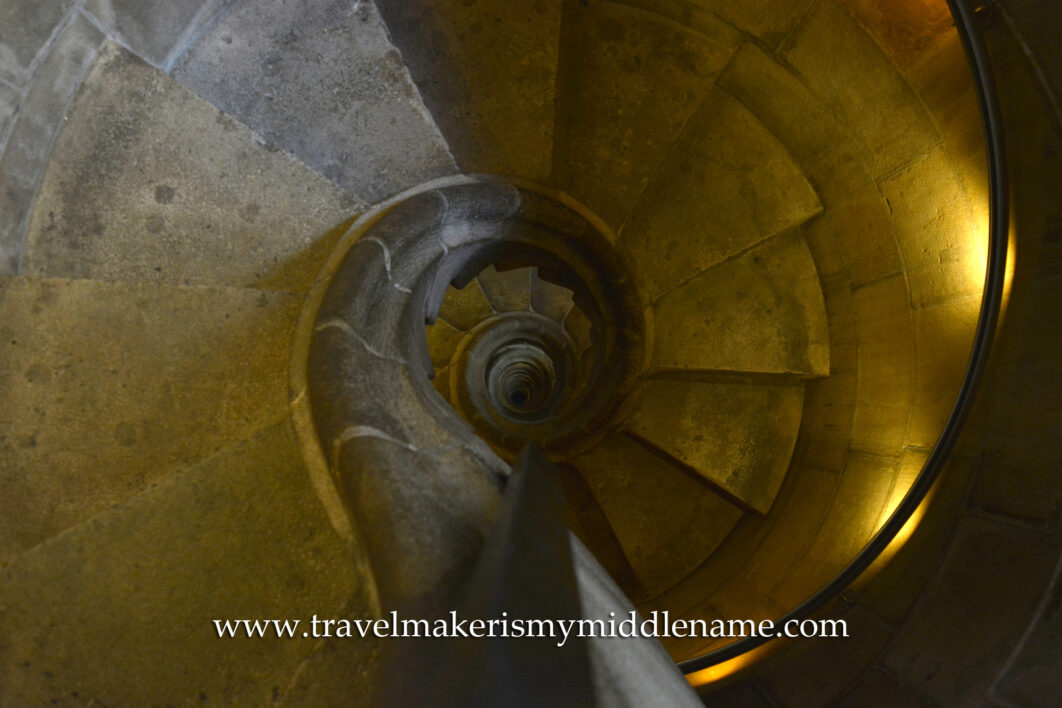
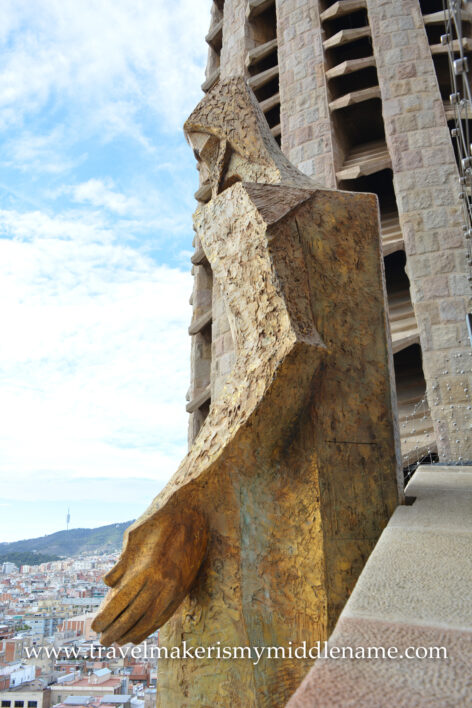
Tip: if you go up the Passion Tower, make sure to look out for the white cross since it can’t be seen from ground level. This is the only white cross you can see up close – the now-completed church has a bigger white cross at the top of the church that is only visible in full from very far away.
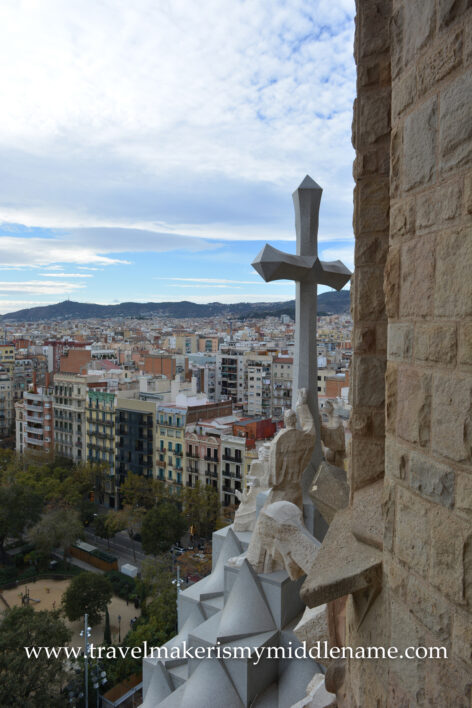
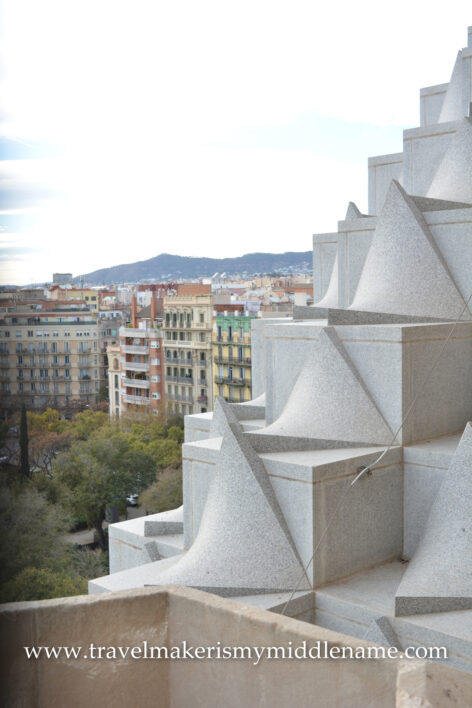
A look through comments on videos of the views from the church on Youtube will show some people thanking the uploader for showing them the views and the inside and saving them the money for visiting. Ultimately it is up to you if this is worth visiting. If you are really interested in the intricate details of the structure and design, then a paid ticket is well worth it. However, if you do go, I would strongly suggest you pay extra for the tower visit so you can see nice views of the city from the top, and the details of the facade that you can’t see from ground level, especially those that face inner courtyards.
Otherwise, you can just admire the structure from the outside and look at photos and videos of it.
Is La Sagrada Familia worth visiting? – My Review
If the question is “Is La Sagrada Familia a tourist trap?”, then the answer is “No, La Sagrada Familia is certainly not a tourist trap”, even if the design is not to everyone’s taste. Although it is impressively constructed and designed, it can be a bit difficult to recommend or not recommend and review objectively for tourists, because unlike other famous structures around the world, it is neither free (such as St Peter’s Basilica or the Berlin Wall) nor has any historical significance (such as the Forbidden Palace or the Berlin Wall) and has only modern popular “cultural” significance (that it was designed by a famous and thus influential Catalan architect, Antoni Gaudi), and not everyone like to “tick boxes” when travelling.
Some people like things because they are beautiful. Other people like things that are weird and wacky. Then there are things that are so bad, it’s famous for being so, and as a result, attract a lot of attention.
La Sagrada Familia attracts millions of visitors every year from around the world due to its unique design. There are many architectural structures around the world that attract visitors due to its design, and beauty is typically in the eye of the beholder, so whether the La Sagrada Familia’s design is worth seeing is dependent on your personal tastes. It has no ancient historical significance, and little modern history significance either.
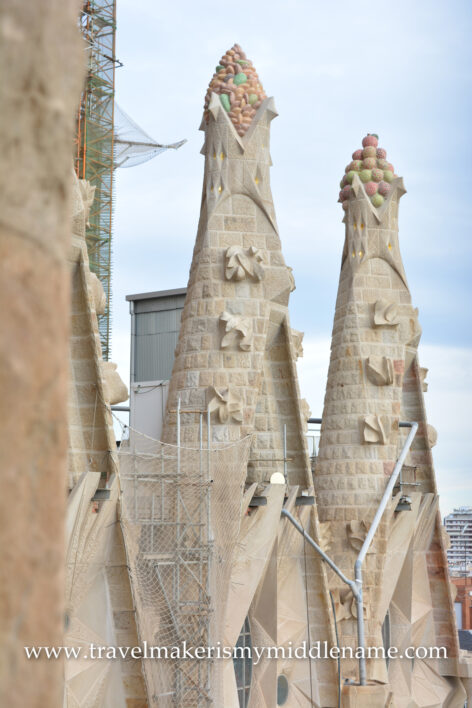
My personal view is that the La Sagrada Familia can be an acquired taste if you look too much into the details of the design. Wide shot photos of the overall look from far away do make good identification photos of Barcelona, and in fact, most of photos of the church if one were to search it up, are of the outside as part of the Barcelona skyline. The overall form and the interior structures are certainly impressive and definitely worth a visit if you appreciate construction and form in design. If you like art, look closely, there are many sculptures to look at as well. There are also stained glass windows to look at, and colourful fruit structures that can be seen from the towers. As a church, it is definitely the most impressive looking one.
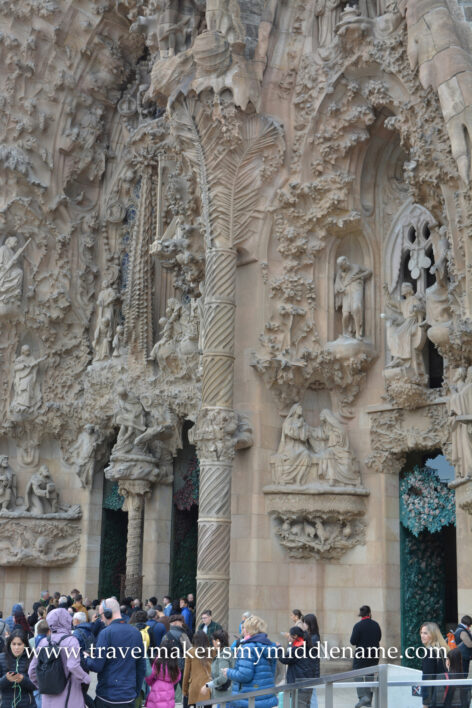
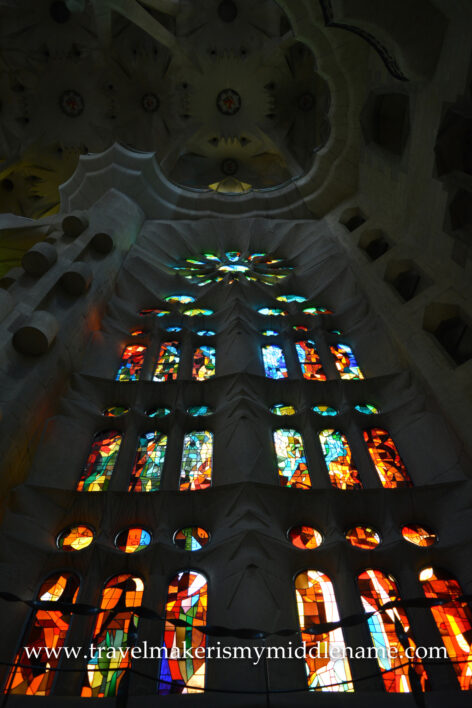
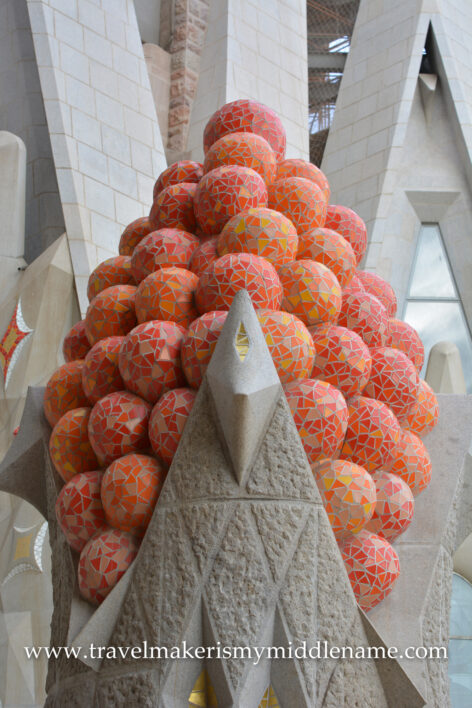
But, some of the designs might be excessive for some people. In fact, the word “gaudy” to mean showy or extravagant in a way that it has become tasteless, came from Antoni Gaudi’s name. And, after having seen a lot of his works, I can certainly see why.
Every surface and every frame of view, not matter how large or small, is adorned with some form of sculpture, either three dimensional or a relief, or has some sort of texture, or colour. This is quite an achievement, if not confusing to look at.
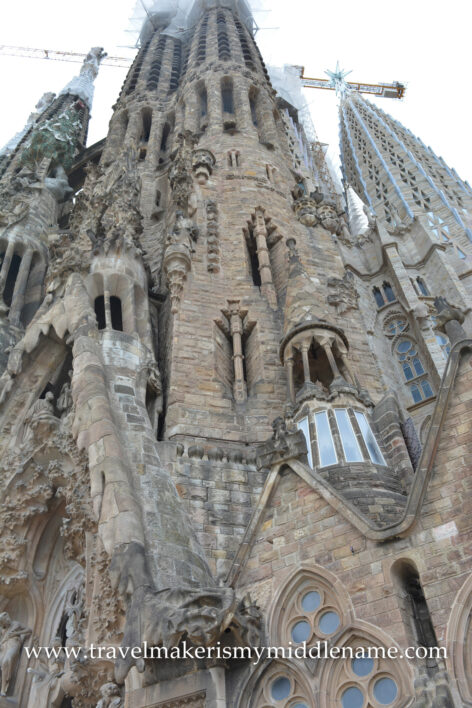
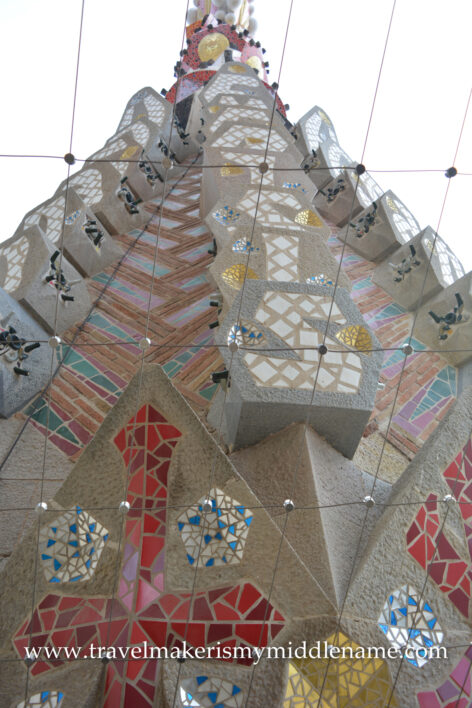
The inside of La Sagrada Familia is quite impressive and interesting to look at due to the thin columns and members that hold up the high ceilings, however, one can argue so are many other cathedrals and churches. It’s really one of the things that the most people say you just can’t go to Barcelona without doing.
Once you start looking at the details of the facade, the image quickly becomes chaotic, unrefined and messy and really not all that appealing. It even looks somewhat like the walls of a jagged cave.
If you don’t mind that and want to see La Sagrada Familia simply because it is famous, or its unique design for the sake of it, or you are a fan of Antoni Gaudi, then it would be worth a visit. I do strongly admire it for the detailed construction efforts, especially considering it started over a hundred years ago with timber scaffolds and constructed without electricity powered tools. I enjoyed my visit because it is a major icon of Barcelona and is impressively constructed.
There is also a small museum separate to the main church. There is also a crypt that is free to enter and not part of the ticket, so you should go to that only after you leave, because the main church does not allow you to re-enter if you leave. It is no where near as impressive as the main church, so you won’t be able to get a sense of the main church just by visiting the inside of the crypt, however the exterior has many of the same construction designs as the main church, and it is the oldest and original part of the church (designed by Francisco de Paula del Villar in 1882).
Which tower of La Sagrada Familia should you go up, Nativity or Passion?
There are 6 towers in total, but as of 2026, still only two are accessible to visitors, the Nativity Tower, and the Passion Tower.
I visited the Passion tower and I can tell you that:
- The Nativity Tower was designed by Antoni Gaudi
- The Passion Tower was not designed by Antoni Gaudi (it was not part of his design but designed later by Josep Maria Subirachs)
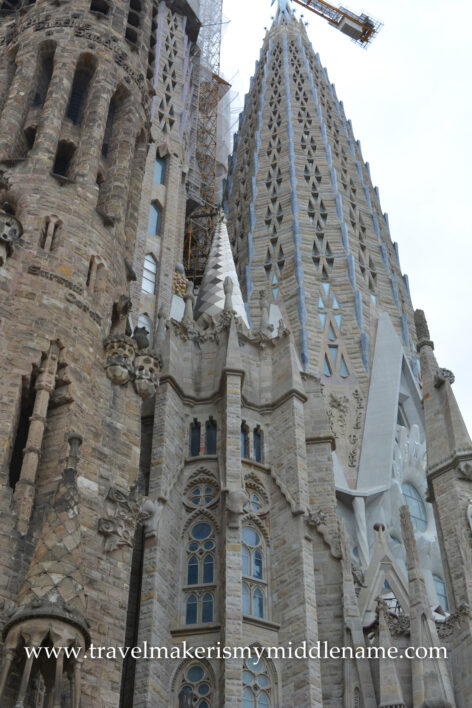
- The Passion Tower is taller than the Nativity tower and provides different, but (I heard when I was researching this) better, views of Barcelona, including the Mediterranean sea. It was also the tallest tower of La Sagrada Familia before the final white cross was installed on June 10th, 2026.
- The Passion Tower has themes and sculptures depicting the life of Jesus, and as the name suggests, the Nativity Tower shows themes of his birth.
- The Passion tower allows you to see the white cross sculpture, which apparently is popular with some people. This is something you can’t see from the ground so if you want to see it, you have to go up the Passion tower. The Nativity tower supposedly lets you see fruit sculptures, but so can the Passion tower.
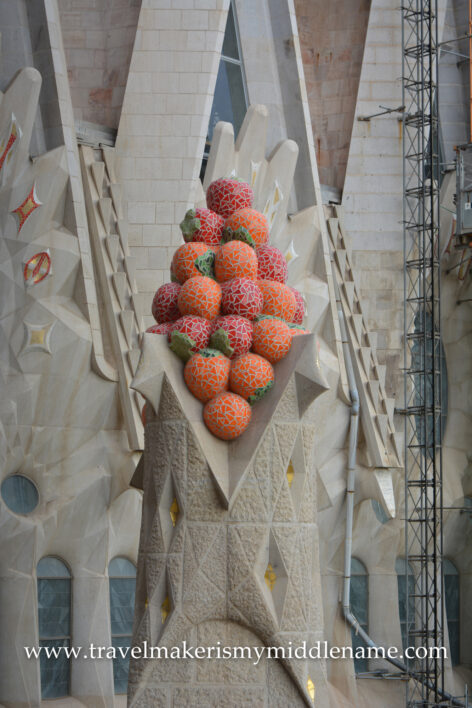
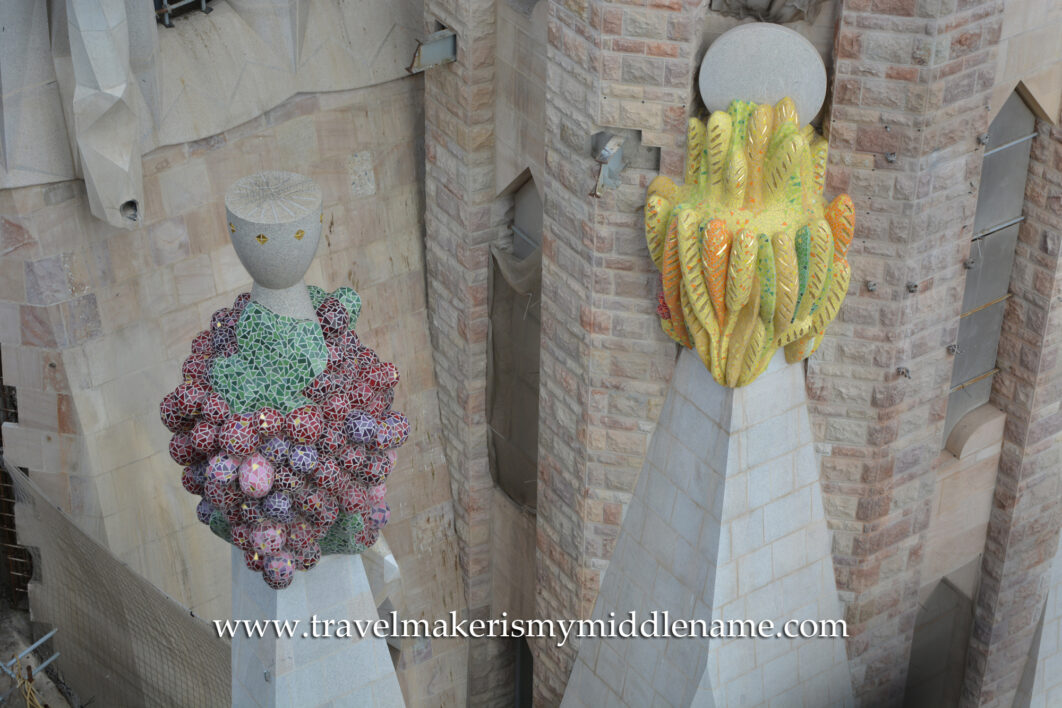
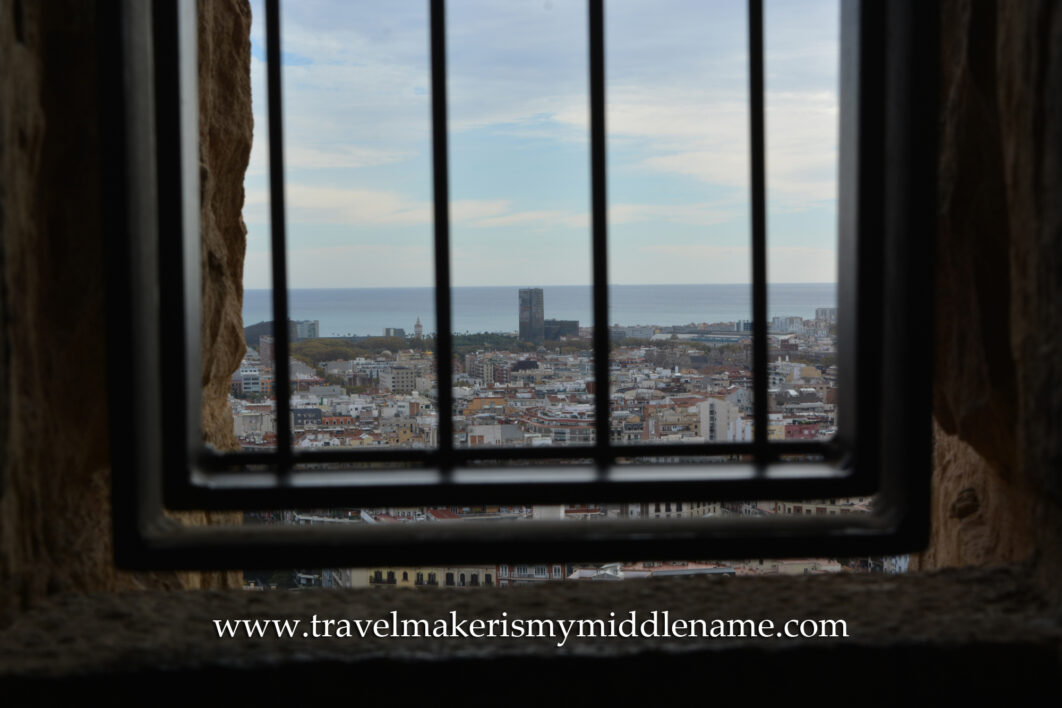
Did you know: Obviously the space for the elevators were not included in the original design of the church, but flexibility and space (and possibly omitting some things in the original designs) were included in the original designs so that modifications can be made easily, which is how the installation of the elevators have not destroyed the rest of the design.
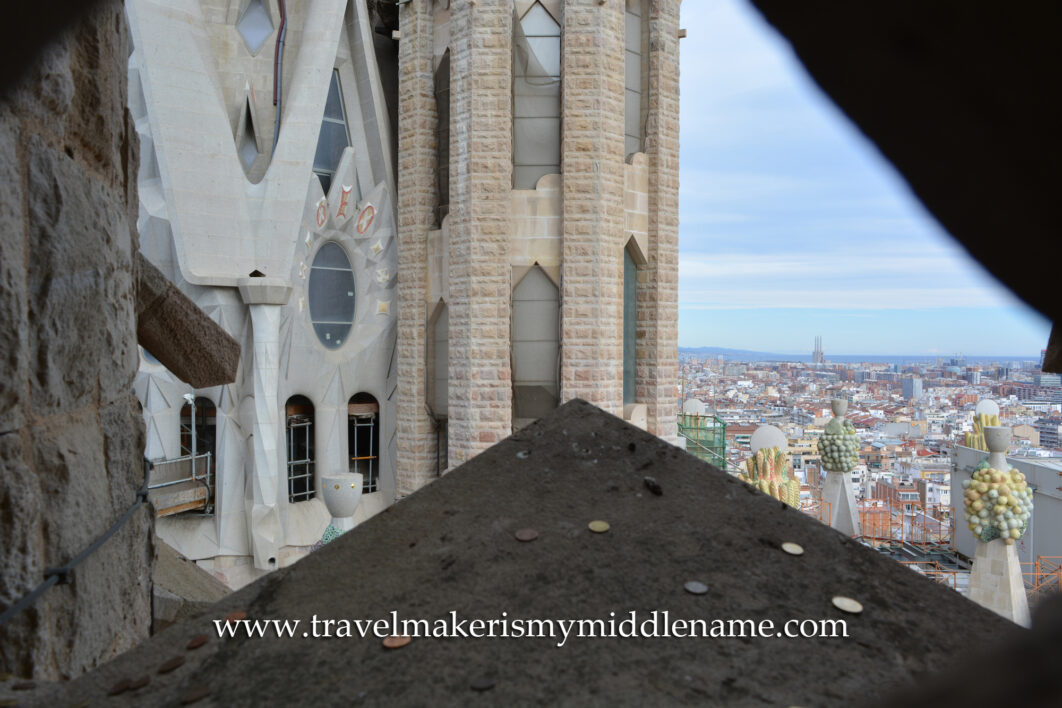
Planning Your Visit
You should plan your visit carefully to get the most out of your visit. Read on to learn why and how.
Pick a time to go, and be on time!
This is very important! If you take nothing else from this article, take this: you are only allowed to enter the church at the printed time on your ticket and you need to book a date and time ahead!
Like many attractions in Europe, La Sagrada Familia church restricts the entry time of visitors in order to have a controlled number of people inside. This means:
- You MUST book your ticket ahead of time (you can do this on their official website) and select an entry time.
- When you book a ticket online, your ticket will show a window of time you are allowed to enter. This is the ONLY time you are allowed to enter the venue
- If you are late, you might not be allowed in. “Might” – this depends on how many people are inside already and how late you are. If there aren’t so many people and you are not very late, there is a good chance they will still let you in. However, this is not guaranteed so you should always arrive on time.
If you arrive early, they will likely make you wait until the time on your ticket.
Purchasing tickets in advance is highly recommended to avoid turning up to long queues, especially during peak tourist seasons. It will also allow you to plan the rest of your day there. To book tickets and for their opening hours, visit from their official page:
Many attractions in Europe implement a pre-booked and scheduled entry. The great thing about limiting the amount of people and controlling the entry time, is it controls crowds and give better photo opportunities for a better overall experience.
Visiting the tower? A note about large bags
While you can bring bags inside the church, there is limited space in the tower stair case, the elevator, and the tower itself, so you will not be allowed to bring large bags to the tower. If you bring bags larger than about a backpack or A4 sized bag, you will be asked to leave it in a locker at ground level before going up the tower. The lockers cost 1-2€ to activate (it uses a coin to activate) and rent, and is not time dependent (ie you can open it whenever you come down from the tower), and is returned to you when you get back down. Coin activated lockers are common at sight seeing places in Europe, including museums. If you have no coins, the venue staff should be able to help. Cameras, including DSLRs, are fine to bring up, but extra large lens might not be. You can always bring it and leave it in the locker if not allowed in the tower.
Visiting La Sagrada Familia as a shore excursion
Can I visit La Sagrada Familia as a shore excursion when on a cruise?
If you are visiting Barcelona during a cruise port call as an excursion, and you have time, you could visit La Sagrada Familia. La La Sagrada Familia is about 10 kilometres from the Port of Barcelona and shuttle buses exist between the port and the city.
However, you should book it as an internal excursion from your cruise, and not independently, because the ship will not wait for you if you return late due to unexpected delays if you book your own activity, so it is highly suggested that you do not book your own tickets on the La Sagrada Familia’s official website, but book it through your cruise company.
Tips for a Memorable and Smooth Experience:
Book your tickets in advance
In peak season it is possible that the tickets sell out fast. So if you are planning a visit to Barcelona, book the tickets in advance online.
No stay time limit means you can stay as long as you want:
Once you get inside, there is no limit to the amount of time you can stay inside La Sagrda Familia. Most people stay about 1.5-2 hours. See note on audio guide below. If you intend on staying for a long time, you can book a time earlier in the day so you can stay as long as you want until closing time.
But!
One entry, not pass-outs and no food allowed
The entire church except the crypt on the side, is surrounded by a metal fence, including the outside of the church where there are structures with information to read and audio hotspots to listen to, that you can stop by. You are only allowed to enter the fenced area once per ticket, but you can go inside and outside of the church itself as many times as you want. Once you leave the fenced area, you cannot go back on the same ticket. You are also not allowed to bring food to La Sagrada Familia, so visit on a full stomach if you intend to stay longer or be smart and discreet about high energy foods you bring and take the trash with you.
Audio guide
When you book a ticket online, you have a choice of also getting the 45 minute or 25 minute audio guide. To listen to the guide, you will need to download their official app (Sagrada Familia Official). There is wifi at the venue but it is not very good when a lot of people try to use it at the same time (but the staff are pretty nice and will help you with it) so if you can, download the app before you get there. See how to download the app on their official website. The audio guide is available in several different languages.
If you have time between cathedral entry time and tower ascending time, listen to the audio, because it has a time limit on it and it would be a shame to miss it. Once the time limit is passed, the audio guide will no longer be available.
If you are going to ascend the tower, plan with the weather in mind
The Passion tower is over 170m tall and even if it is 20°C at ground level, it can be very windy and cold at the top. Additionally, the narrow stone bridges are exposed to the elements so if it is raining, you will get wet, OR, sometimes the tower is closed due to bad weather or for maintenance, so you should check the weather forecast before booking your tower trip. Also note: La Sagrada Familia church does NOT give refunds, not even partial refunds if you paid for a trip to the tower and it is closed for any reason.
Visiting the Passion tower?
If you go up the Passion Tower, make sure to look out for the white cross since it can’t be seen from ground level. Ask the other people you meet in staircase if you haven’t seen it.
Photographer? Consider visiting in the afternoon
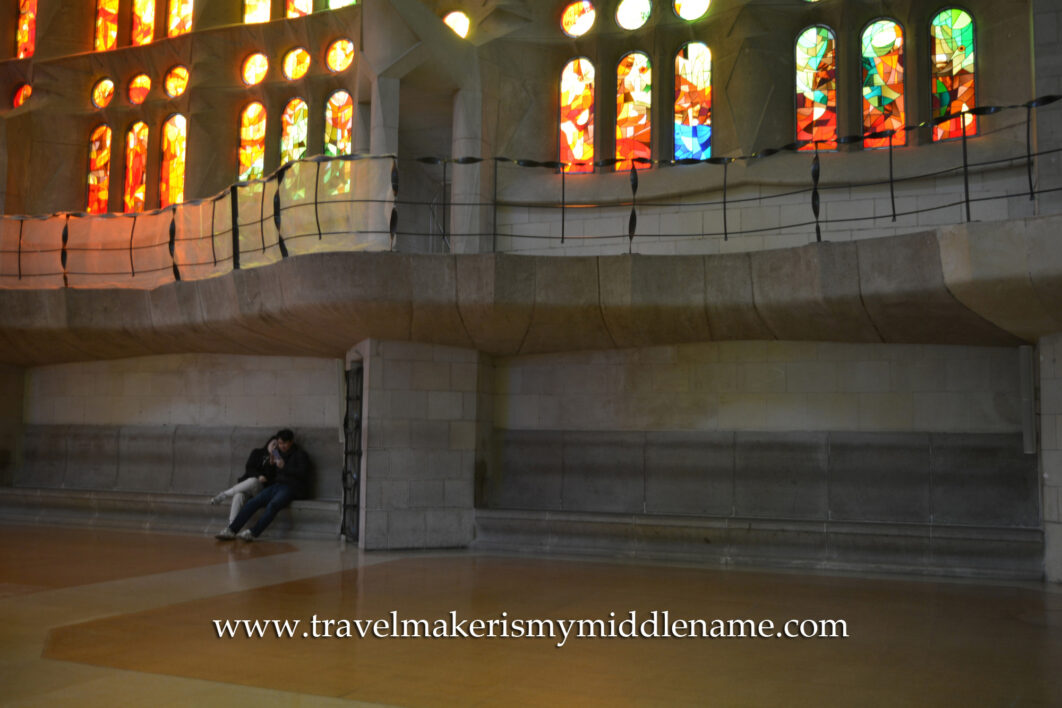
In the afternoon around sunset, the sunlight goes through the stained glass windows of the church and makes great photos. Of course this means you’ll have less time to stay compared to if you wanted to stay there the whole day by arriving first thing in the morning; otherwise if you only intended on staying the typical 2 hours, this is great.
Have extra time? Plan a post-visit picnic
After visiting La Sagrada Familia, enjoy a leisurely morning or afternoon in one of the two parks immediately outside the church. Both Plaça Sagrada Familia and Plaça de Gaudi offers views of La Sagrada Familia and has a flat walkable path surrounded by plenty of park benches and trees for shelter, making it a nice place to enjoy a casual lunch with a view. Plaça de Gaudi has a small lake in the middle.
If you visit La Sagrada Familia early and have plenty of time left, you can visit other attractions nearby, such as the psychedelic Casa Batlló or the Casa Mila apartment. These are just a few more Gaudi sites that would complement and complete a Gaudi architectural tour for fans of his organic designs.
Accessibility
The entrance to La Sagrada Familia is directly from the street. The sidewalk and path are pretty flat and step-free (there might be some steps outside, particularly at the entrance where the metal gates are). The forecourt where there are audio guide stations, are flat, as is the church inside.
However, the towers are not wheelchair accessible, but the steps within them have low rises and a thin and easy to grab handrail.
To get to the top of the towers, you ascend in an elevator, but to get back down, you need to walk down via the spiral staircase. The lifts take you all the way to the top of the tower where there is an exposed stone bridge to an enclosed lookout. Then you make your way back down the staircase, taking in the view on the way down. The doorways and windows are all very narrow. As you reach the ground level, it can get very dark. Some people might also find it slightly claustrophobic. As someone with a disability who cannot climb stairs but can descend them, they were perfectly manageable with the handrail.
Toilets
One design flaw is that the toilets on site are inside the property fence, accessed via a pretty steep upwards slope. It is not wheelchair friendly.
If you haven’t been there before, and have questions, leave a comment blow, and enjoy your trip there. If you have, feel free to share your experience below.
Recommended Itinerary/Suggested Visitor’s plan
Considering that visitors can only enter once on a single ticket, here are some recommendations for your trip.
- See the outside first and use a map. Depending on whether you have time to visit the area on multiple days, or whether you can get there about an hour before your booked entry time, you should take a walk around or view the outside of the building at least generally before you go inside, this will provide structural context for what you see inside. Use a map of the church to give you directional context for what faces east and west (the church is actually oriented diagonally south west to north east). Then you can view it more in detail after you leave.
- Listen to the audio guide. There seems to be a time limit on the audio guide. Listen to that first if you can. Bring earphones and use your own mobile data if you can.
- Look up when you enter the church, that’s where the most impressive construction is.
- Walk by the stained glass for obvious reasons.
- Sit in the aisles to experience some quiet time in the church and to rest your feet and legs. You can also appreciate the altar from the chairs.
- Go up to the altar before you leave, it’s more accessible than the tower and takes no effort to see
- Visit the Crypt last since it is free.
How to get to La Sagrada Familia
To reach La Sagrada Familia, the best way is to utilise Barcelona’s efficient public transport system.
By Metro:
The easiest way is to take the Metro, using Line 2 (the purple line) or Line 5 (the blue line) to the Sagrada Familia Station. The exit to the metro will take you directly across the road to the church, on the edge of the Plaça de Gaudi park.
By bus:
Alternatively, several bus routes service the area, including lines 19, 33, and 34. If you are traveling by car, limited parking is available nearby, although it is suggested to use public transportation due to the high demand for and limited parking spaces.
Tickets
Tickets for individuals start at 26€. For up to date ticket prices and opening hours, visit their website: (change the language in the top right corner). You can buy the tickets on site but as mentioned, you should buy it online for a better experience.
If you found this article helpful, please make a donation.
I know these messages are annoying, but please don’t skip this. If you’ve read this far, please make a donation. I am not just another blogger soliciting donations.
What I am asking donations for:
I need financial stability because my disabilities and chronic illnesses prevents me from getting a job to recover from a devastating financial loss. I am asking for donations to recover the money I lost.
Why I am asking:
I:
• have serious lifelong disabilities and chronic disease from multiple cancers, including a childhood one that destroyed my ability to grow and develop normally,
• live in a difficult situation,
• lost my life savings.
I am raising funds to rebuild the financial security I lost after becoming the victim of a scam. Due to severe disabilities and chronic illnesses caused by childhood cancer treatment and subsequent health problems, I am unable to work and cannot recover these losses through employment. Donations will help me cover essential living costs, medical expenses, legal costs, and to restore some semblance of living to my life and hopefully, pursue some dreams of mine.
Why now:
People rush to donate when a visible tragedy happens. The rest is ignored. Although my first cancer happened over 30 years ago when I was a small child, the consequences of the treatment is just as devastating, and even more so, since I was robbed of ever having a normal life from the beginning. My consequences are permanent and life-long. While it might not seem like a sudden event with great impact, the reality is, it is indeed an event with severe impacts. I live with the consequences of something I had no say in, every day, and it affects me minute to minute, in an increasingly severe manner, and I will always suffer the consequences, permanently. After years of trying to build financial independence despite my disabilities, I lost my savings through a scam out of desperation to try and leave an unsafe living situation. Because I cannot rely on paid employment, rebuilding those savings is not something I can possibly do alone.
How your donation can help:
The passage of time doesn’t make it better, in fact, it makes it worse. The long term effects of my cancer treatment gave me multiple permanent and degenerative disabilities and chronic medical conditions that requires ongoing health care and support. I have been long term unemployed as a result, and live in an unsupportive household with no other options. To make matters worse, out of desperation to get out of the hole I am in, I fell victim to a scam, losing my entire life savings and leaving me in complete ruin and further unable to change my situation. I am stuck in a vicious cycle because I cannot seek a better environment to move to without money, and I can’t earn money with all my health problems, and I can’t seek treatment interstate or overseas without money.
An authentic request:
I am remaining anonymous for safety reasons, but I have provided verification documents with identifying information redacted, in my fundraiser.
About this site:
Despite my disabilities and chronic health diseases, I love to travel. Most of the travel I have done and places I have visited, I went as a solo traveller. I started this as a blog in 2015, where I posted reviews and practical information about places I have been to. Now, this is a standalone site that contains practical and useful information that I gathered from first hand, personal experience and independent travel, and I pass on this information so you know what you’re doing and what to expect, instead of blindly following a tour group or an influencer’s cherry-picked and staged photos. All the food and destination photos on this website are taken by me. I maintain this site and and my other sites alone, and take great care to ensure content is correct at the time of writing, and practically useful for potential travellers.
If you connect with my story, find my content helpful, and want to support me personally:
Please donate to my personal fundraiser, or share my fundraiser if you cannot. I wouldn’t be asking if I had other options, and if everyone pitched in, my goal can be achieved. You can read about me on my About page. Thank you.
Alternatively, if you would like to support a female, solo and independent traveller, you can have a look at my photos here, prints are available for purchase: https://theintrepidphotographer.com/
©All rights reserved for all content and photographs, usage on 3rd party platforms, including, but not limited to, websites and smartphone apps, and to train AI in any way shape or form, is forbidden without prior written permission. Photos are taken by author unless otherwise stated and is available for licensing.
Related posts:
 Quick guide to 4 architectural attractions in Barcelona you can see on a budget
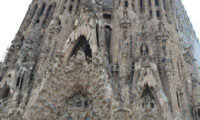 Construction of La Sagrada Familia church in Barcelona is officially completed after 144 years
 Your practical guide to German Christmas markets: What to see, do, buy, and eat
 Rome Attractions: The top 9 attractions in Rome, Italy 2025
 12 Free and paid things to do in Venice, Italy
 Day trips from Hamburg: Lübeck | All seasons + winter itinerary suggestions how to see it on the cheap