
Last Updated on: 20th February 2026, 11:08 pm
If you are used to free public toilets, there are several things you need to know about public toilets before you go to Europe.
To avoid any misunderstanding, public toilets are toilets for the general public, outside on the streets, in train stations, and in shopping centres.
(Many) Public toilets are not free
The first thing to know about public toilets in Europe is that in many countries, particularly in Germany, Austria, and Italy, they are not free. In public places and most shopping centres, patrons have to pay to use them. Typically this is done by inserting a 1 or 2 Euro coin into a coin slot into the door or turnstile barrier, some places have a separate payment machine that issues a paper ticket with a barcode on it that you then scan to get past the barriers. Toilets in train stations are not free, you need to pay to use them. These places are not manned by anyone.
Toilets in shopping centres
Technically, these are not public toilets, but a private toilet business. Many toilets in shopping centres also require payment, this is usually less, around 50 Euro cents. In Germany and the Netherlands, public toilets are not funded by taxes, and so is a private facility. You may see a person sitting outside the toilets – these people are toilet attendants, they collect payment from people to use the toilets, and clean the toilets where needed. This system avoids non-customers from using the toilets, prevents vandals, and makes sure these toilets are always clean and stocked.
Public toilets in train stations
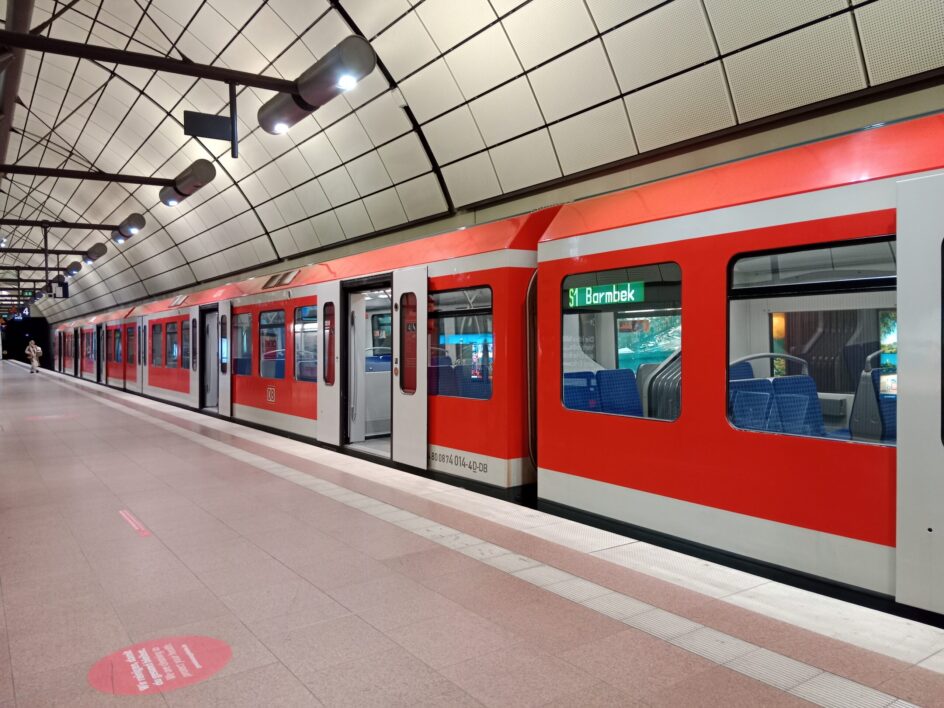
Public toilets in train stations and outside on the streets are unisex. On regional trains in Germany, toilet facilities and cleanliness can really vary. Toilet paper, paper towels and soap are typically provided, but they may not be replenished or maintained frequently, and the cubicle itself can range from clean to very dirty. Functionality can vary – they might be all working well, or there might be broken facilities. You can better prepare by bringing your own toilet paper or even soap if you think it is necessary in case the toilets run out or if it’s not particularly clean – you may not be able to simply go to a different stall. See below for the reason.
Paying to use the toilets
Some toilets have a lock on the door of each cubicle that is unlocked by payment, for example, I came across such toilets in the food court of a Swedish shopping centre in 2011, these were individual stalls with their own door. Standalone public toilets are also pay-per-entry. If you pay to enter one, and discover there is no toilet paper and so decide to leave, you will have to pay again to enter another one. Others, like the ones at train stations in Germany and Austria, have multiple stalls after entering a main paid gate, in this case, visiting more than one stall is possible. Sometimes the gate is an automated door that close after you pass it, others are turnstiles that turn only once per payment.
Public toilets (such as those in France and Iceland) on the streets are a self contained restroom in an enclosed room with a door that slides open upon payment. These ones close from the inside via a button, so you can have more than one person enter per payment, particularly for parents with small children, although most places don’t charge for young children.
Private “public” toilets: Toilets in Cafes and Restaurants
Many tourists Most people from English speaking countries might be accustomed to asking a cafe, restaurant or petrol station to use their bathroom facilities. In Europe, cafes and restaurants will charge you to use their facilities, especially in high traffic areas, so that they don’t get swamped by loads of tourists using their facilities, disturbing their premises, and not paying anything in return. However, do not expect these toilets to be very clean as the focus is on serving the dining customers. Therefore, it might make more sense to buy a small item and then use their toilet, so that at least you get something for your money.
Other toilets
Toilets in private venues, like events and museums, are free, since you already paid to enter. Toilets in museums are guaranteed to be much better serviced and facilitated.
Tips on managing toilet needs on your trip to Europe
Here are some toilet tips for you to better prepare for your trip Europe.
1. Always have spare coins on you in case you need to use toilets outside.
Not all, if any/many pay to use toilet accept card. You can have all the money in the world on a card but no coins and won’t be able to access the toilets, particularly the toilets that aren’t manned by anyone.
2. Use the toilets in the hotel room or lobby before you leave.
This is a no-brainer, but you should use the toilet in your hotel before you leave – that is guaranteed to be free and has all the facilities you need.
3. The cheapskate way:
If you really had to, you can wait outside the door of an occupied cubicle and enter after someone else leaves so you do not have to pay. Or, if you are travelling with family/friends, you can go one after the other or together. This only works for toilets that have their own payment system.
4. Use the toilets on the train instead of at the train station.
Use the toilets on the train on long distance trains (read this article for the difference between various train types in Germany) rather than at the station. If you are going to board a long distance train anyway, whether it is a regional or ICE train, you can board the train and use the toilets on board for free – however, train toilets may not have baby change facilities and are typically unisex stainless steel toilet bowls. Bring hand sanitizer or your own soap.
If you found this article helpful, please make a donation.
I know these messages are annoying, but I am not just another blogger soliciting donations.
I live with long term disabilities and medical conditions and have been long term unemployed, and live in an unsupportive household. I make great efforts to create genuine, accurate and helpful content. I write all my articles personally, and take most of the photos on this website myself.
I started this website in 2015, back then it was a blog where I wrote about my trips, whether they were local outings or international trips when I could. My disabilities have made it dramatically more difficult to get around, but I have a wealth of practical travel knowledge that I want to share, so I am turning this site into an information site, so that travellers are armed with useful information about a destination before they go.
Please donate to my personal fundraiser if you can, or share my fundraiser if you cannot. I wouldn’t be asking if I had other options, and if everyone pitched in, my goal can be achieved. You can read about me on my About page. Thank you.
©All rights reserved for all content and photographs, usage on 3rd party sites are forbidden without permission. Photos are taken by author unless otherwise stated.